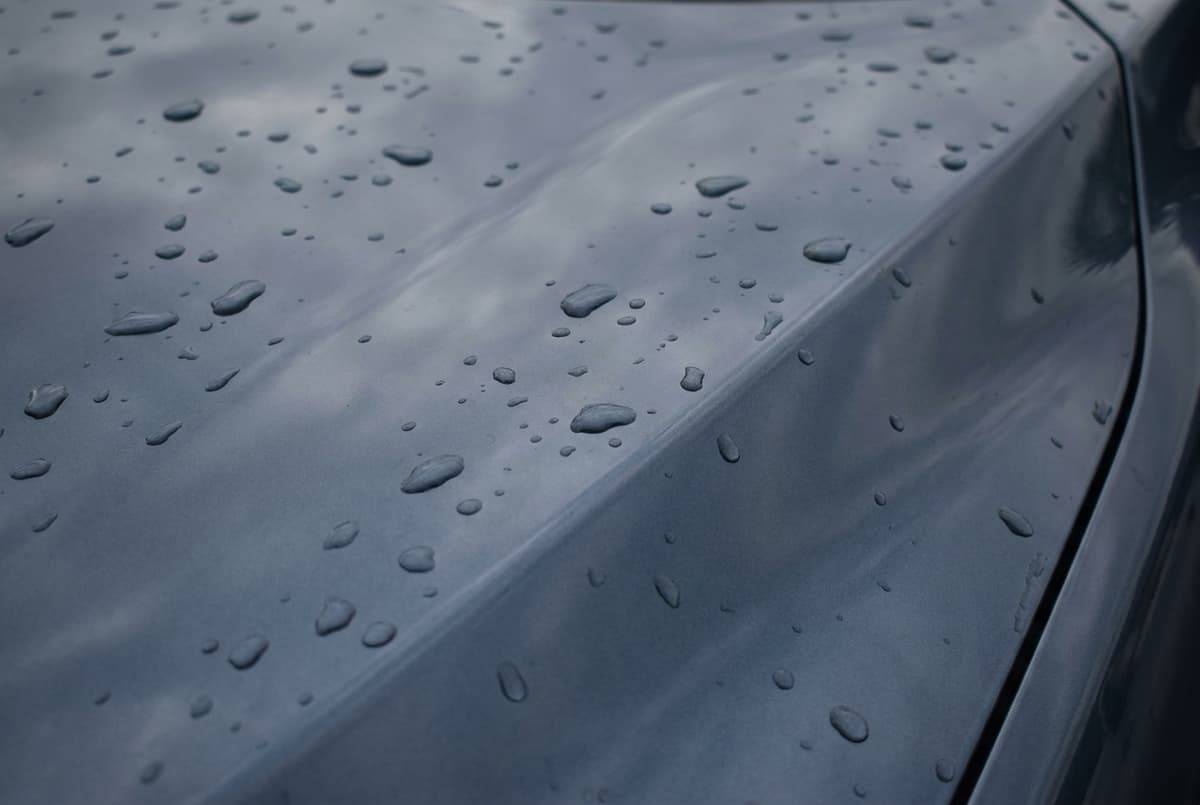
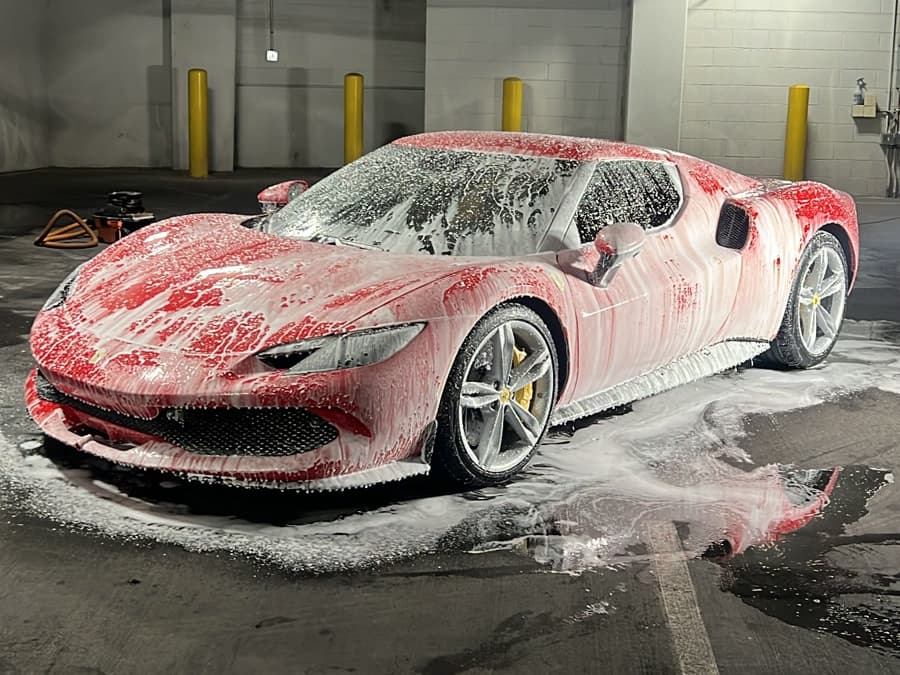
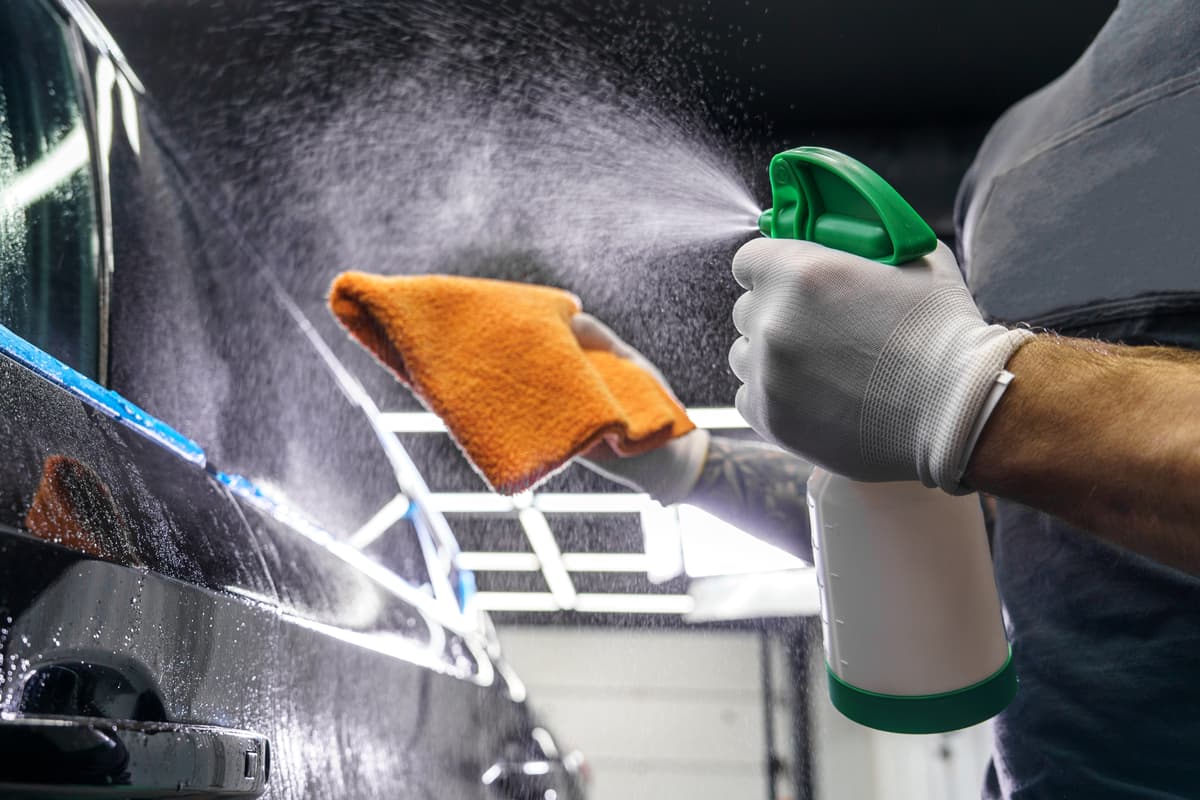
A good coated-car wash starts before the hose comes on. Pick a spot where washing is allowed, make sure the panels are cool and shaded, use products that suit your coating, and have enough clean tools on hand to finish drying. Then rinse off loose dirt, wash with light, controlled contact, rinse thoroughly and dry promptly. Adding a protective spray afterward is a separate decision, not an automatic last step.
This guide covers routine washing of glossy painted surfaces once your installation’s instructions allow it. Confirm which coating you have and its care directions first. Film, matte finishes, repaired paint and specialty wheels may have different requirements. If the instructions are missing or contradict each other, sort that out before you start or mix products. If the coating is brand new, see our first-days aftercare guide.
Set up a wash you can finish
Will the car stay shaded through washing and drying? Are the panels cool? Can you keep clean supplies away from blowing dust and finish without interruptions?
Ceramic Pro’s care guidance calls for shade and rules out warm surfaces (Ceramic Pro maintenance directions). With Las Vegas’s sunny summer heat and windblown dust, it’s worth checking ahead, and if conditions are working against you, pick another time or place (NWS Las Vegas climate summary).
Have clean mitts or other wash tools, separate wheel supplies, rinse water and clean drying towels ready, plus spares, so a dropped mitt or dirty towel never goes back on the paint.
Plan around the water you actually have. LVVWD identifies calcium and magnesium as the source of local hardness, and notes that activated-carbon taste filters don’t remove hardness or minerals (LVVWD water-quality facts). Check what your system actually removes, and don’t assume a filter means you can skip drying.
Before the water goes on
Check the local water rules first
Whether you’re allowed to use the water and how to care for the coating are two separate questions. As checked on October 21, 2026, LVVWD’s published guidance limits personal vehicle washing at residential properties to once per week per vehicle, using a garden hose with a positive shut-off nozzle. Its mobile-washing guidance separately specifies high-pressure, low-volume equipment and less than 10 gallons per vehicle (LVVWD conservation measures).
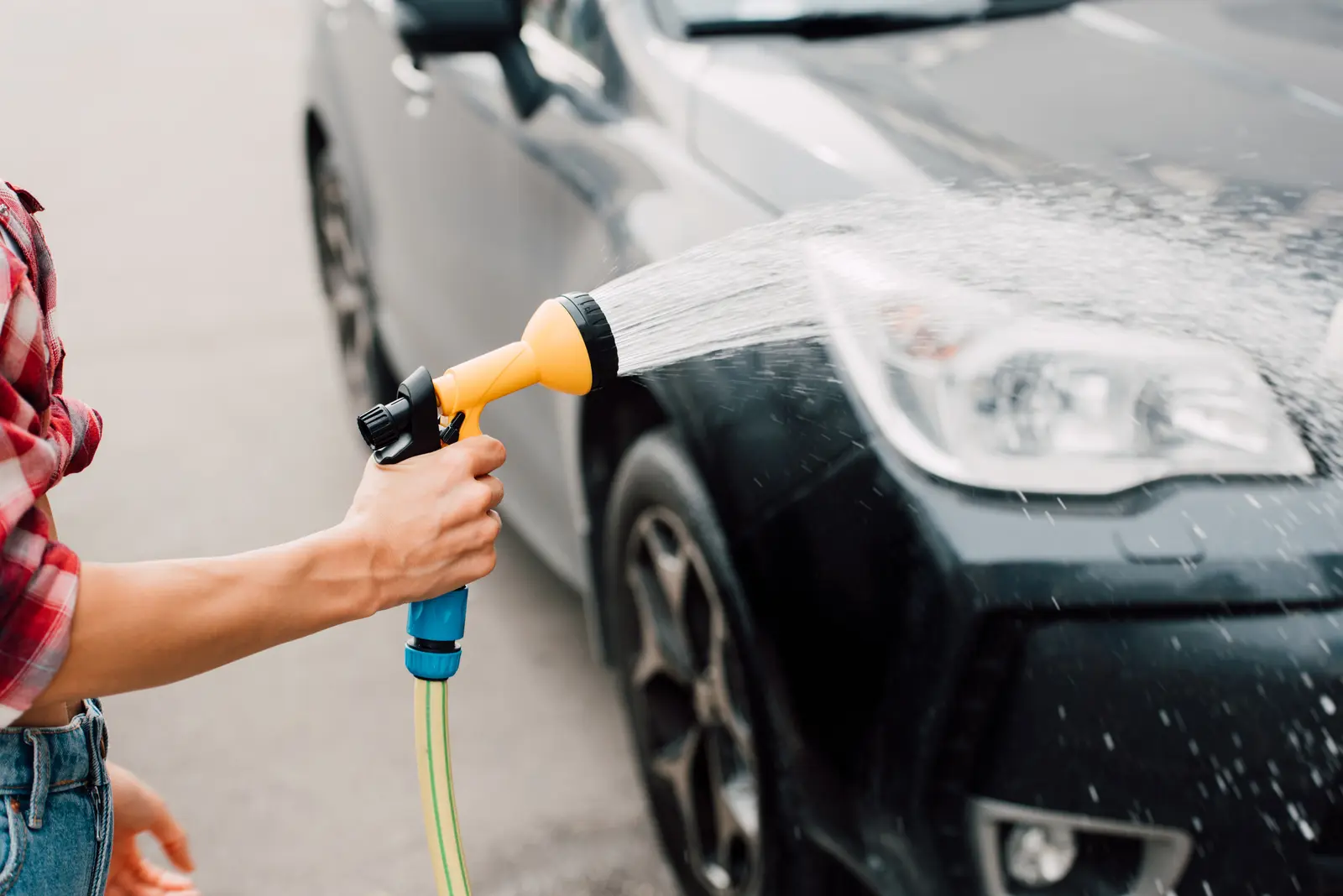
Confirm the current rules with the water provider for your address, and get any property permission you need. SNWA links to the area’s different ordinances (SNWA local-rule guide).
Plan where the washwater goes, too. Clark County’s residential guidance says not to send washwater into the street (Clark County residential stormwater guidance). If the location can’t support a permitted wash, arrange an alternative before you start.
Choose products before you open them
Use the shampoo and directions approved for your coating. “Ceramic” on a bottle doesn’t tell you whether it belongs in your routine. Gtechniq, for example, publishes a specific mixing and rinsing procedure for GWash (Gtechniq GWash instructions).
Check whether a product just cleans or also leaves protection behind. Ceramic Pro’s aftercare limits added waxes, sealants and boosters to its own directions (Ceramic Pro product restrictions).
Keep wheel tools and water separate from the ones you use on the body. System X’s wash guidance also keeps wheel supplies apart from body supplies (System X washing guidance).
A step-by-step wash
Here’s a typical workflow to adapt to your car, coating and product instructions.
- Do any approved wheel work first. Use dedicated, compatible supplies. Don’t wet the whole body and then leave it while you work on the wheels. Once you start on the body, be ready to carry on through rinsing and drying.
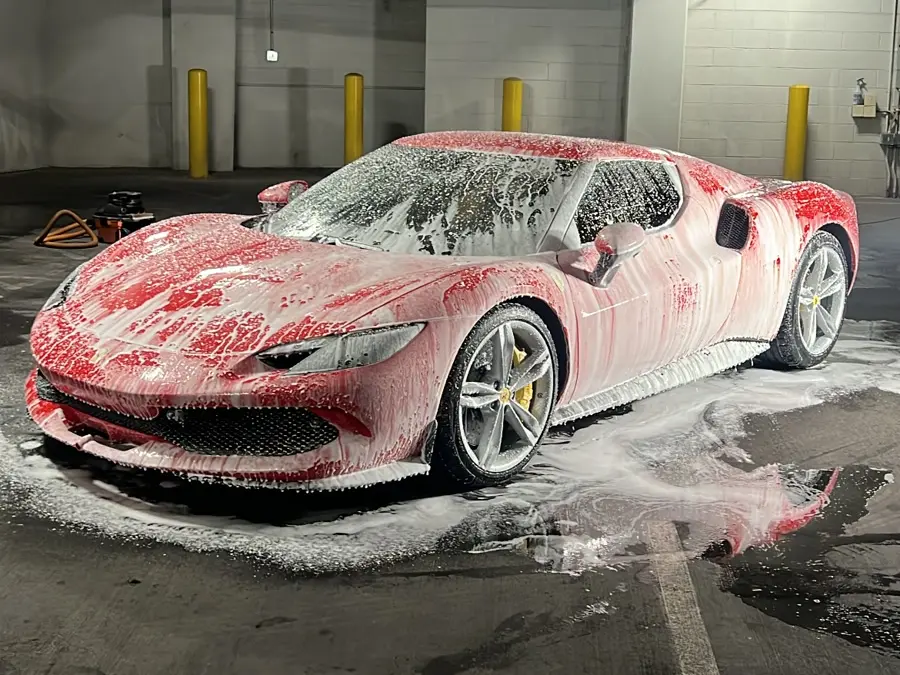
- Rinse off loose dirt before touching the paint. Pre-rinse using the pressure and nozzle distance specified for the vehicle, surface and equipment. Gtechniq’s GWash guidance starts with loose-dirt removal before using a mitt. Foam, if allowed, has its own application and rinse directions.
- Wash in manageable sections. Use the approved shampoo with clean mitts or other wash tools. Work from the upper surfaces down toward the dirtier lower areas, rinsing the mitt separately before it goes back into the wash solution. Swap out dirty or dropped tools instead of carrying grit around. Don’t try to scrub away an unfamiliar mark.
- Rinse and move straight to drying. Rinse the product off as directed, before it dries, then dry the clean surfaces. Keep the job small enough to finish. If residue makes you stop, rinse according to the product’s directions before you pause; don’t leave it sitting while you look for advice.
Gtechniq’s instructions support washing top to bottom, using separate mitt-rinse water and finishing with a thorough rinse (GWash application and washing guidance). To decide between hand, touchless and tunnel washes, see our wash-method comparison.
Drying is part of the wash
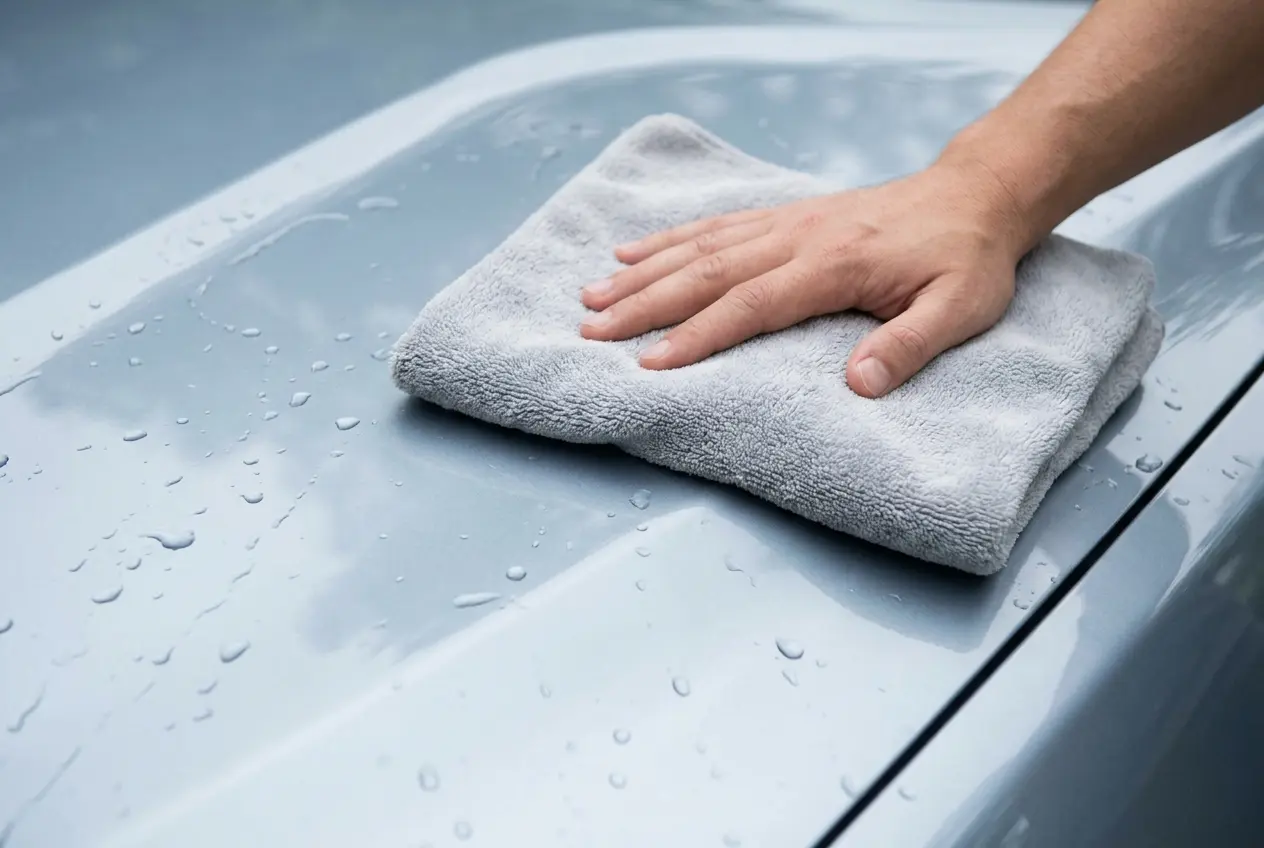
Don’t let the rinsed car air-dry while you put supplies away. System X explains that evaporating tap water can leave mineral deposits, and recommends letting a clean microfiber absorb the water without aggressive wiping (System X drying guidance).
Use a clean towel and swap it if it picks up dirt or hits the ground. If a mark remains, pressing harder isn’t the next step. Check for leftover water and later drips without rubbing the same spot over and over. Controlled air drying may be an option if your instructions allow it.
You don’t automatically need a drying aid, either. Check the exact product, when it can be used and whether it adds a layer your coating’s instructions allow. Don’t stack a shampoo, detail spray and booster just because all three mention ceramic protection.
What to do next, based on what you see
Go by your coating’s maintenance requirements and the car’s actual condition. A light layer of dust after parking doesn’t justify a quick dry wipe, and it doesn’t automatically call for another full detail.
Scroll to see all columns.
| What you notice | Sensible next step |
|---|---|
| Ordinary dirt has built up | Plan a compatible wash when it’s needed and allowed, with a way to dry the car. |
| Bird droppings, insects or sap | Follow your coating’s care response promptly; don’t wait for wash day. |
| A mark is still there after a permitted wash | Get an assessment before adding a remover, clay or polishing. |
| Water behaves differently | Note what you see and the care history, then see our guide to when a coating stops beading. |
System X’s aftercare calls for prompt attention to contamination and warns against aggressive products or forceful spot removal (System X contamination precautions). For a broader routine that includes interior care and restorative work, see our guide to how often to detail a car.
Choose the next action
Ordinary dirt
Plan a compatible wash when needed and allowed.
Bird droppings, insects or sap
Follow the coating’s care response promptly; do not wait for wash day.
A mark remains after washing
Get assessment before adding a remover, clay or polish.
Water behaves differently
Record what you see and care history; do not assume failure.
Before booking a maintenance visit
ZNT’s Mobile Detailing Service includes hand washing. Before booking it, tell ZNT which coating or other protection is already on the car and share its care directions. Ask whether the proposed products, drying method and any sealant step fit those instructions, and whether a compatible scope can be agreed.
When you request a maintenance recommendation from ZNT, include the vehicle, existing protection, current dirt or marks, and where you’d like the work done.