Spilled a drink on a perforated seat? Park first, deal with the source, then promptly soak up the liquid you can reach the way your vehicle’s instructions allow. Don’t add more liquid or press it into the holes. If you’re not sure how much got into the seat, or a seat-related warning or feature starts acting differently, get vehicle-specific advice before treating it as a cosmetic job. A surface that looks dry can’t tell you what soaked through.
First, deal with the liquid you can reach
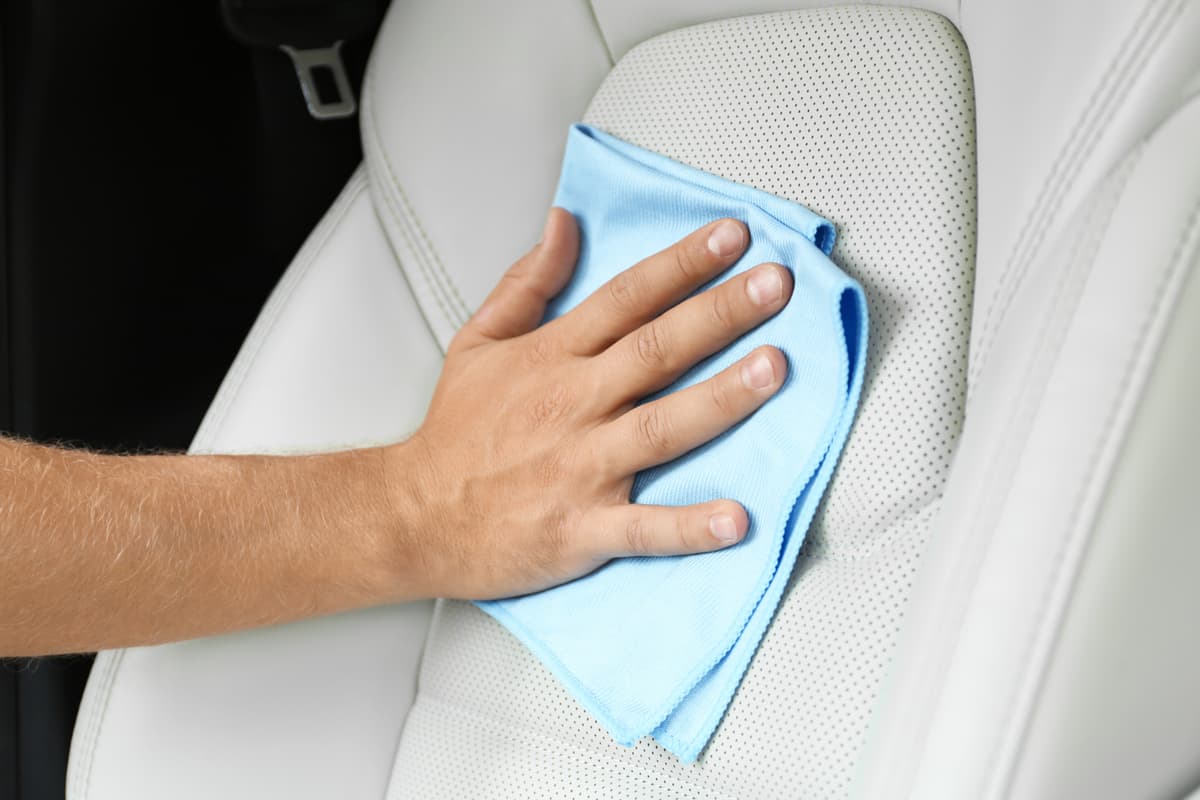
Move the container without spreading the spill. For an ordinary drink, follow your manual’s directions for prompt cleanup with a clean, soft cloth. Keep it gentle: don’t scrub, press hard or try to flush the liquid back out through the perforations. And don’t poke the holes with a pin or toothpick.
The Kia US ventilation-seat instructions, for example, say to wipe up spilled liquid with a dry towel and dry the seat completely before using the ventilation.
Soaking up liquid is a separate step from choosing a stain cleaner. The 2020 Ford Edge Canada/US manual (January 2020 second printing) says to deal with spills promptly, avoid soaking surfaces and avoid rubbing stains into leather. Its leather-seat section specifically rules out foam cleaning products on perforated leather (Ford Edge manual, printed page 303).
Tesla’s current online US Model 3 manual describes cloth-applied care for its specified seat materials and says not to spray seats directly or blow-dry them (Tesla seat-cleaning guidance). Both are good reasons to read your own seat instructions before adding any product.
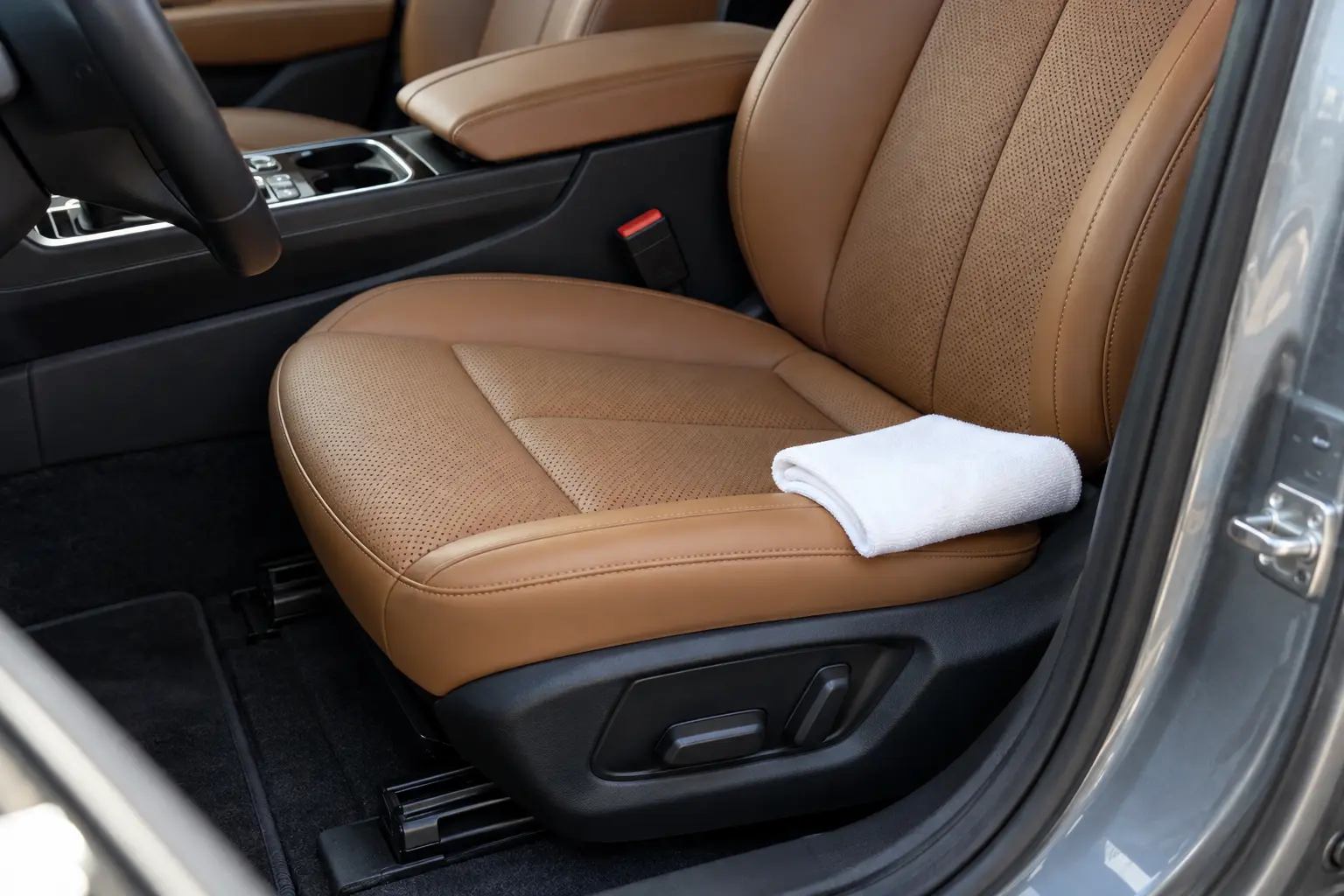
Know which seat you’re dealing with
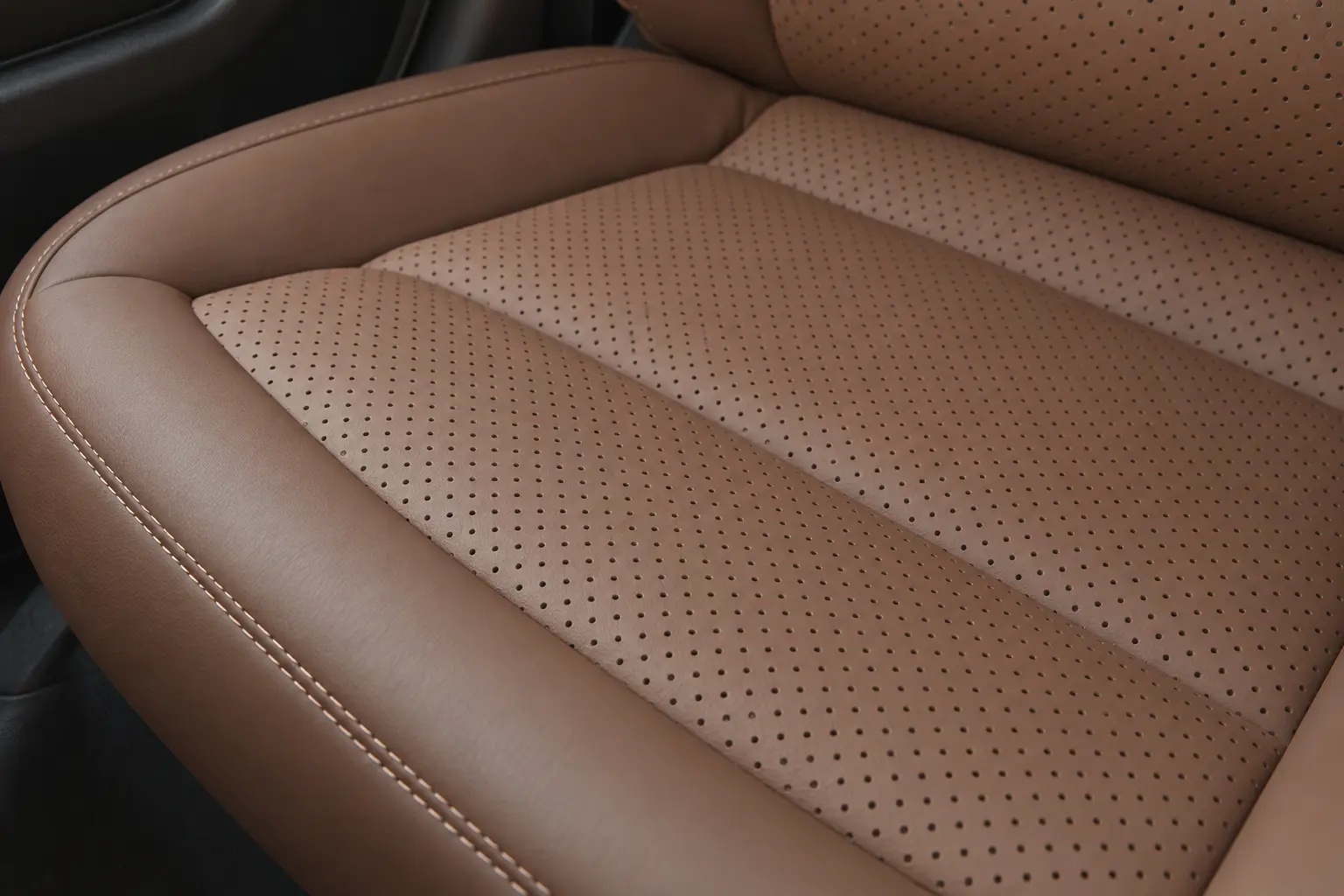
Perforations alone don’t tell you what the upholstery is, whether the seat is ventilated or what’s underneath.
Note the year, model and trim, the exact seat and panel, and any heating or ventilation features. Add the documented covering (or “unknown”) and any replacement upholstery. Our leather and synthetic-seat guide explains the fuller material check.
This article covers ordinary drink spills. An unknown chemical, bodily fluid or flooded interior needs advice specific to that substance and vehicle.
Surface mark, or liquid inside the seat?
A small mark you can reach on a known, intact covering may only need the ordinary care your instructions allow. But a small visible patch doesn’t prove the spill stayed on top.
Scroll to see all columns.
| What you can report | Who to ask, or what to do |
|---|---|
| A known, limited surface mark, with care instructions for that seat | Follow the approved ordinary care; stop if the surface changes or it isn’t helping. |
| A lot of liquid, or an unknown amount, got into the seat, or dampness or odor won’t go away | Ask the manufacturer’s support line or a qualified vehicle service provider before agreeing to cosmetic cleaning. |
| A warning you can’t interpret, or a seat feature working differently | Follow the vehicle’s warning and use instructions, and get vehicle-service advice promptly. A detail appointment isn’t a substitute. |
A smell, dark patch or damp feeling doesn’t mean there’s mold, a failed sensor or permanent damage. If it’s actually a blue clothing mark and there was no spill, our denim-transfer guide covers that.
When vehicle service comes first
The Kia US occupant-detection chapter shows why this matters. It describes a detection device inside the front passenger seat cushion, warns that spilled liquid may affect the warning or the system, and says the seat must be completely dry before driving after a liquid spill. It directs passenger-seat and occupant-detection service to an authorized Kia dealership.
Follow your own manual, and if you’re unsure whether the seat is OK to use, ask the manufacturer’s support line or a suitable service provider.
An airbag OFF indicator can also be normal, depending on the vehicle and who’s sitting there. Don’t try a reset; leave seat removal, connectors and system checks to the right service provider.
Choose the right next conversation
Limited surface concern on known, intact covering
Use approved routine care. Stop if the surface changes or care does not help.
Significant or uncertain liquid entry; persistent dampness or odor
Ask manufacturer support or qualified vehicle service about the seat before cosmetic work.
Unclear warning or changed seat operation
Seek vehicle-service guidance promptly and follow vehicle warning and use instructions.
Skip the seat heater and hair dryer
The same 2020 Ford Edge manual (printed pages 145–146) says not to use its heated seats after water or another liquid spills on them until they’ve dried thoroughly. The Kia ventilation example likewise requires complete drying before using the fan.
Don’t improvise with a seat heater, hair dryer or heat gun to beat a deadline. Before using the seat or its features again, ask what needs to dry, who will check it and which instructions apply.
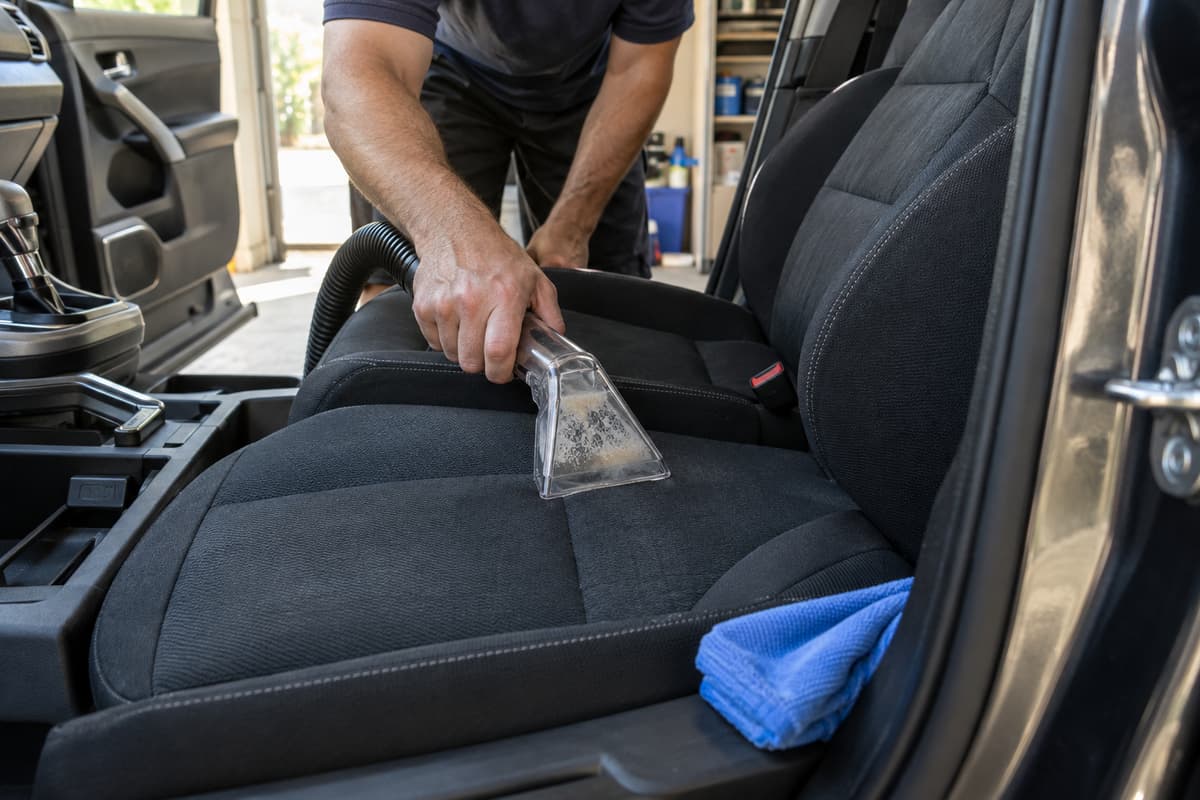
If compatible wet cleaning is suggested after an assessment, our guide to cleaning methods and drying will help you talk through the process and handover.
Write down what happened
A useful spill record includes:
- Contents: the drink and any known ingredients or additives; say if you don’t know.
- Amount and timing: an honest estimate, when it spilled and when you noticed. The bottle’s size isn’t the amount that reached the seat.
- Location and features: the seat, panels, nearby controls and any heating or ventilation you know about.
- What you tried and noticed: every product, cloth, tool or powered feature used, plus any lingering dampness, odor, marks or changes in how things work.
Take a wide photo and a close-up.
Make a useful spill record
Next time, put drinks in a proper holder and check the lid is closed, rather than leaving a loose bottle on a seat.
Don’t count on the desert heat
Las Vegas has hot, sunny summers, while monsoon weather can bring higher humidity (National Weather Service climate summary). Tell your detailer where the car will actually be parked or worked on, and when you next need it, instead of assuming the desert will dry it.
A hypothetical: you spill a drink in the morning and need the car for an evening shift. By afternoon, the seat looks dry. The real question is whether your instructions, and any assessment you needed, say it’s OK to use, not how many sunny hours have passed.
What to send ZNT
ZNT’s Mobile Detailing Service includes interior vacuuming and surface cleaning. Ask what care is proposed for the affected seats. The service overview doesn’t list seat removal or electrical repair. ZNT’s terms ask you to mention known issues.
Send your spill record, material information, the relevant vehicle instructions, photos, your location, when you need the car and any advice you’ve already had from vehicle service. Ask what compatible cleaning can reasonably address, what’s excluded and what may still show afterward. Then contact ZNT for a recommendation and current quote.