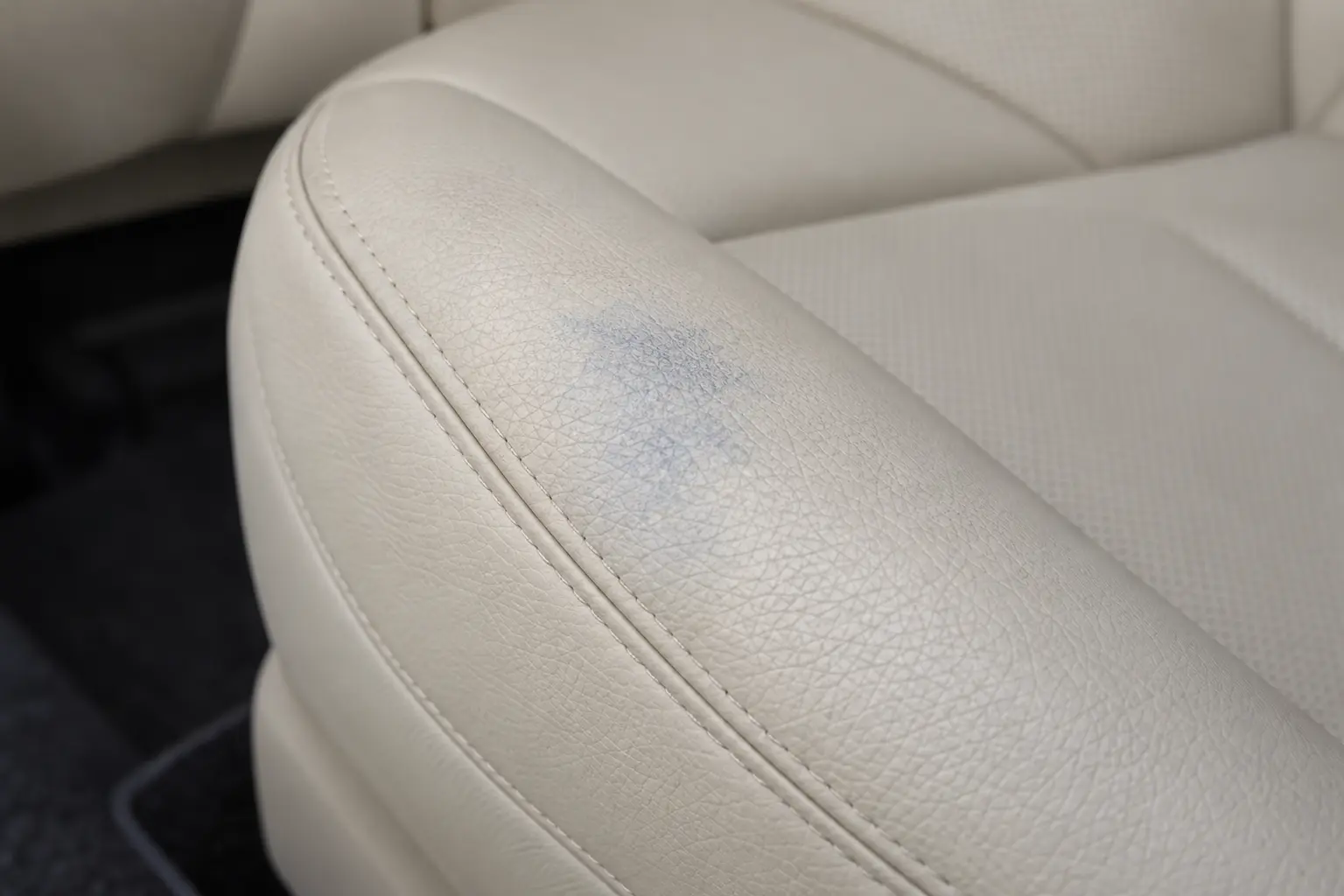
Found a blue-gray mark on a pale seat? Before grabbing a cleaner, think about what’s touched it and check the seat’s care instructions. If you know the material and the surface is intact, stick to the ordinary care those instructions allow. If you’re unsure of the material, the surface looks changed, or the approved care hasn’t helped, stop experimenting and ask for an assessment.
Clothing dye is a real possibility. The US 2015 Volvo V60 manual warns that clothing that isn’t colorfast, including new jeans, can stain upholstery (Volvo interior-care guidance).
Write down what you see before you scrub
Look closely at the spot and note what you know. “Blue-gray shading on the driver’s outer bolster, first noticed yesterday” is much more useful than “the leather is ruined.” Add anything that touched that area, like jeans, a belt or a bag. Keep guesses separate from what you can see.
Scroll to see all columns.
| What to note | Useful details | What you still won’t know |
|---|---|---|
| Appearance | Color, location, size and any change in texture or gloss | Whether it’s transferred color, other residue, wear or something else |
| Contact history | Clothing or accessories that touched the area; any care warning on the item | Whether that contact caused the mark |
| Previous care | Exact products, tools and attempts, including work before you owned the car if known | What an undocumented earlier treatment involved |
Here are two hypothetical examples. One owner notices shading after wearing new dark jeans and knows which pair. Another buys a used car with an older mark and no history. The first has a useful contact detail to report; the second should simply say the history is unknown. Take a wider photo to show where the mark is and a closer one to show what it looks like.
Record what you know about the mark
Start with the care your instructions allow
Confirm the actual seat covering for that panel using your vehicle or replacement-upholstery paperwork. Our leather and synthetic-seat guide explains that step. A pale color or leather-like grain isn’t enough to choose a product.
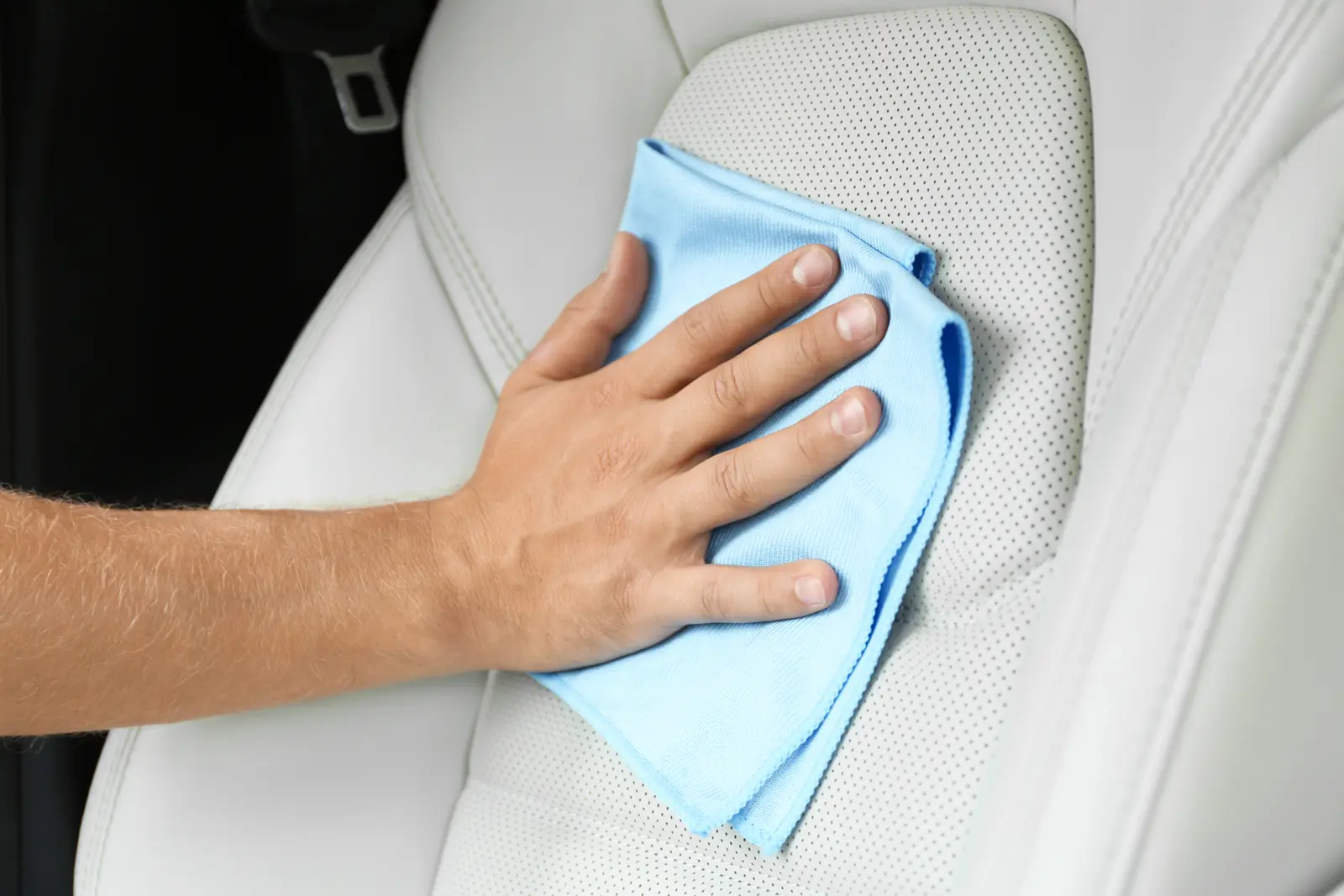
For an identified, intact surface, find the instructions for loose-dirt removal, ordinary cleaning and drying. Clear away any loose dirt the approved way before you work on the mark. If the instructions call for a test in a hidden spot, do it.
For example, the vegan-seat section of Tesla’s current online US Model 3 manual describes gentle cleaning with a soft cloth, warm water and mild soap for general spills and stains, then drying with a soft cloth. It says not to spray the seat directly or blow-dry it (Tesla Model 3 cleaning instructions).
If the mark came from a spill, or moisture got into perforations, read our perforated-seat spill guide before treating it as discoloration.
Know when to stop
If approved ordinary cleaning doesn’t help, that’s useful information for an assessment. Going over it again with more pressure, an abrasive pad, a powered brush or a homemade solvent isn’t a sensible next step.
Toyota’s US service bulletin T-SB-0009-18, dated February 2, 2018, warns that abrasive cleaning can remove protective resistance from the seat materials it covers (Toyota leather and synthetic-leather care bulletin).
Stop and report what happened if an attempt changes the gloss, texture or color, or the surface seems to lift or peel. Those signs change the question from “What stronger cleaner should I try?” to “What condition is this surface in, and should it be cleaned any further?”
An older mark with an unknown history calls for the same restraint. Tesla’s seat guidance itself acknowledges that transferred stains can’t always be safely cleaned off. A realistic assessment might recommend limited cleaning, leaving some discoloration, or a separate look at the finish. It shouldn’t turn into an automatic restoration sale.
Lower the odds of a repeat
Check the care label on the actual garment. Denim maker Citizens of Humanity explains that its indigo denim can transfer color to light surfaces, especially when new, and advises avoiding contact with light colors for the first several wears (Citizens of Humanity dye-transfer guidance). Follow the instructions for your own jeans, and don’t assume one wash makes them colorfast.
If you know an item transfers color, keep it off the seat while you look into suitable care. If you’re considering a seat cover or other barrier, check that it’s approved for your vehicle.
For Las Vegas, the National Weather Service describes hot, sunny summers and periods of windblown dust and sand (NWS Las Vegas climate summary). After dusty driving, mention any loose grit as well as clothing contact, and talk through a suitable spot for the work.
If the history points to sunscreen or another oily residue, mention that separately and check our sunscreen-residue guide. Don’t pick a dye treatment just because the seat is light.
Before you buy a protector
Treat an existing mark and future protection as separate decisions. A product that claims to prevent stains doesn’t necessarily remove one that’s already there, and it may not belong on your seat at all.
The Tesla vegan-seat instructions mentioned above don’t recommend other conditioners or protectants. Ultrafabrics also warns, in the Ink & Stain Resistant collections note in its August 2021 instructions, that clothing-dye transfer isn’t always fully preventable and may be irreversible (Ultrafabrics cleaning and collection limitations).
Before you say yes to an add-on, ask:
- Do the instructions for this exact covering allow it?
- Is it meant to clean an existing mark, reduce future transfer, or both?
- What can still happen, and what care will it need afterward?
Those answers tell you more than a blanket “dye-proof” promise.
Separate assessment from protection
Scroll across to compare all columns.
| For an existing mark | Before choosing a protector |
|---|---|
| Pause if material is unknown, the surface changed or approved care did not help. | Check approval for the exact covering. |
| Ask if more cleaning is appropriate and what may remain. | Clarify whether the goal concerns an existing mark, future transfer or both. |
| An assessment does not promise restoration. | Ask what may still happen and what care is required. |
What to send ZNT
ZNT’s Mobile Detailing Service includes interior care. Ask what cleaning or conditioning is proposed for your seats and included in your quote. The service overview doesn’t list an interior-coating or recoloring service.
Send your vehicle details, the material (or “unknown”), the exact spot, a wide and a close photo, when you first noticed the mark, any clothing contact you know of, and the products or tools you’ve already tried. Include your location and any limits on where the work can happen.
Ask what compatible cleaning can reasonably be tried, what may remain and whether the condition needs a separate specialist assessment. Then contact ZNT for a service recommendation and current quote.