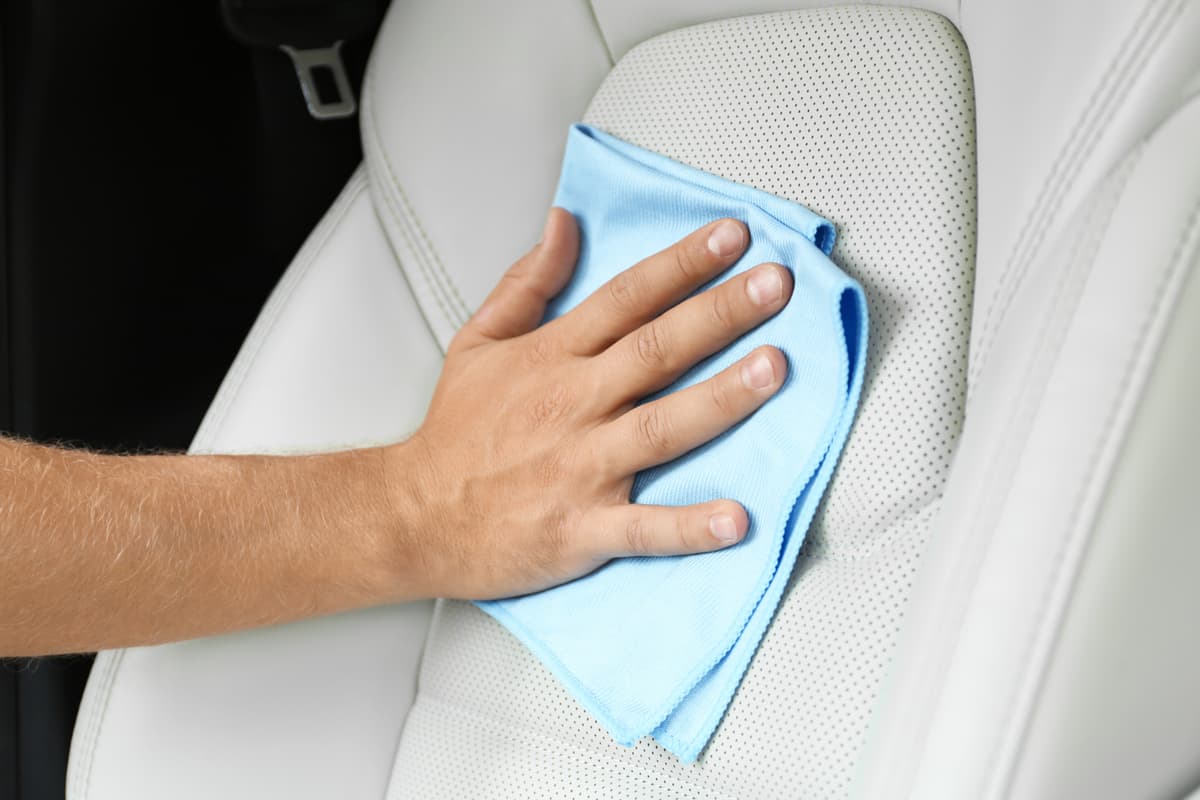
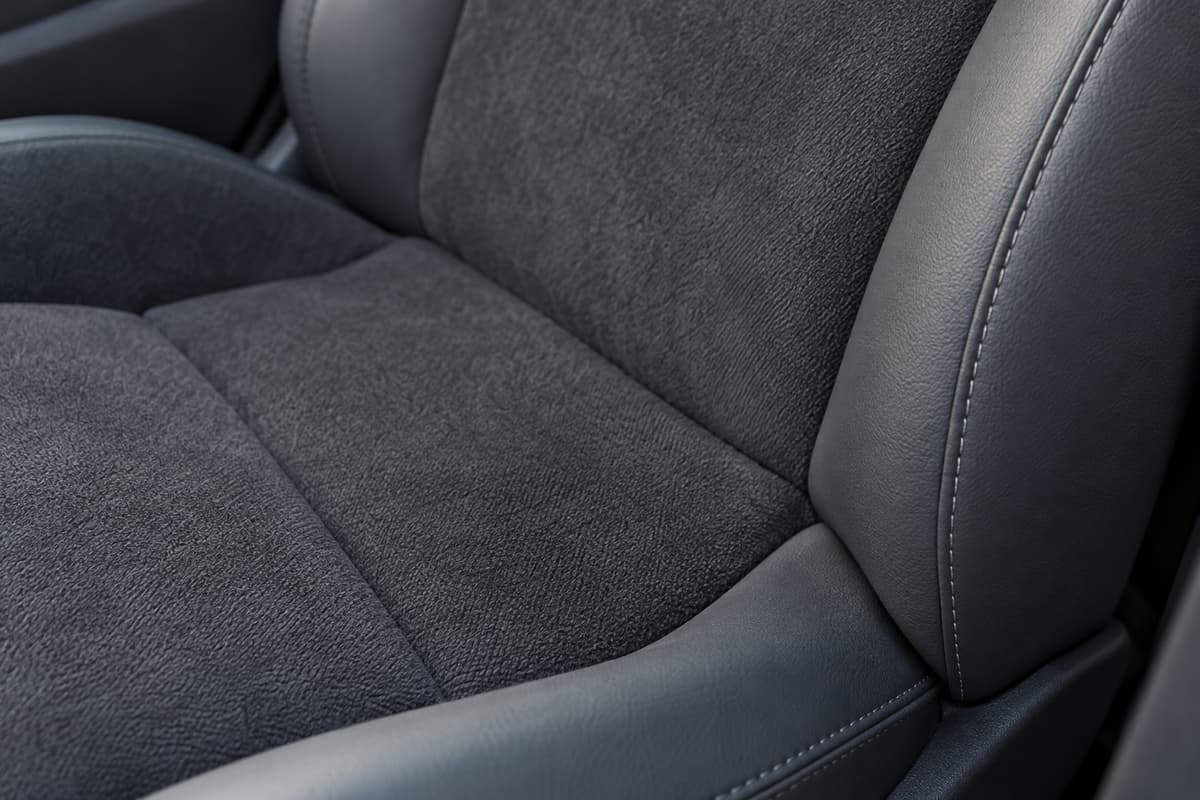
Before you buy a leather conditioner, find out what the panel you want to clean is actually made of, then check its care instructions. The seat’s grain, the car’s price tag or a bottle labeled “for automotive interiors” won’t tell you.
So, do car seats need conditioner? There’s no single answer. One manual’s leather section may call for a protective treatment while another discourages conditioners on its synthetic seats. The goal is to match the product to the surface, its instructions and its condition.

Start with a simple material record
Begin with your car’s year, model and trim, then look for the upholstery option in the original specification or purchase records. Open the matching owner’s manual and find the interior-care section. Treat these as a starting point: they may not cover every panel, and a used car may have replacement coverings or a retrim.
Be specific: “driver’s outer seat bolster” is more useful than “leather interior.” If the problem is the door armrest, don’t assume the seat-cushion instructions cover it too. When the records leave a gap, ask the manufacturer’s vehicle support or whoever installed the replacement covering.
A short record can stay with the car:
- Vehicle: year, model, trim and upholstery option, if known.
- Panel: the exact seat, insert, bolster or armrest.
- Material: the documented name, or “unknown.”
- History: any replacement or retrim work, plus cleaners or treatments used before.
- Care reference: the matching manual section or the material maker’s instructions.
Know the panel before the product
Scroll to see all columns.
| What you know | Next step |
|---|---|
| A documented leather upholstery option | Find the instructions for that leather and that panel; don’t swap in a general leather recipe. |
| A documented synthetic material name | Find that material’s care guidance instead of treating “leather-like” as an instruction. |
| A suede-like look, but no record | Confirm the material before following care instructions for a named brand. |
| A replacement covering or a panel you’re unsure of | Ask the installer or manufacturer for the material record; mark it “unknown” until you know. |

Why conditioner advice can point in opposite directions
Two examples show how much this varies. The US 2021 Volvo XC90 manual’s section on optional leather upholstery describes a protective coating and recommends Volvo’s specified cleaning and protective-treatment program (Volvo XC90 leather-care guidance). So a coating on its own doesn’t make protective treatment pointless.
On the other hand, the vegan-seat section of Tesla’s current online US Model 3 manual doesn’t recommend conditioners or protectants (Tesla Model 3 cleaning guidance).
The point isn’t to pick a side; it’s to read the instructions for your seats. A broad claim on a bottle shouldn’t override a restriction in your manual. Save the relevant care page with your material record for next time.
Keep routine care in proportion to the problem
Once you know the surface, check three things in its instructions: how to remove loose dirt, how to apply an approved cleaner and how to dry the surface. Volvo’s leather section, for example, calls for vacuuming before cleaner.
If the instructions call for testing a product in a hidden spot, do it. If the first attempt doesn’t give you the look you expected, resist mixing up something stronger.
Judge the result against the original finish and the actual problem. More shine, scent or product doesn’t mean better care. For light everyday dirt on an intact surface you’ve identified, compatible routine cleaning may be all it needs. Anything more intensive needs a real reason, not just a bottle on the shelf or an add-on on the menu.
What Las Vegas conditions change
Las Vegas has hot summers, and strong winds can bring blowing dust and sand (National Weather Service climate summary). That makes outdoor parking and visible dust buildup worth mentioning when you talk about care. It doesn’t mean every seat needs conditioner on a fixed schedule.
After a dusty stretch, look at what’s actually on the surface before wiping or adding anything. Tell your detailer whether the car is mostly parked outside, which areas collect residue and what you’ve already used.
When routine cleaning isn’t the right first step
If you notice peeling, a lasting color change or a surface that changed after a previous product, stop experimenting. Note what happened and ask for an assessment.
Some problems need their own plan. For a blue mark on light upholstery, see our guide to denim transfer. For a suede-like insert, start with our Alcantara and suede-like material guide; Alcantara itself publishes separate care instructions. For liquid in a perforated seat, our spill-response guide walks through what to do first.
Check the instructions and condition
Material or matching instructions are unknown
Identify the panel and care reference first.
Visible change or possible damage
Request assessment and stop trying new products, even if the material is known.
Intact, identified surface with light soil
Follow its matching routine-care instructions.
Agree on compatible care with ZNT
ZNT’s Mobile Detailing Service includes interior care. Before work begins, ask which cleaning or conditioning tasks are proposed, whether they are included in your package and how they fit your surfaces and any restrictions in your manual.
Here’s a message you could send: “My vehicle is [year/model/trim]. The concern is [exact panel], documented as [material or unknown]. Here is the care reference and a photo. I have used [product, or none], and I have noticed [condition]. What compatible cleaning would you recommend, and what should I expect to remain?”
Use our interior-detail scope checklist to cover the rest of the cabin, then contact ZNT for a recommendation and quote.