Pick a paint-correction scope based on your actual finish, the improvement you want and the limits you’ll accept. A bigger stage count alone isn’t a reason to buy more work. A useful quote explains what each step is meant to achieve, which marks may remain and when the work should stop.
That might mean one polishing stage, separate correcting and refining stages, more assessment first, or no abrasive correction at all. Start from the real surface and its care restrictions, not a package number.
What “one-step” and “multi-stage” can mean
A single polishing stage can combine some correction with finishing. Multiple stages can split an initial correcting step from a later refining step. “Refining” means improving the finish the previous step left, not another round of chasing every deeper mark.
RUPES gives a concrete example: its D-A FINE polish can be used on its own for light polishing, or as a second step after D-A COARSE (RUPES polishing-system guidance).
So ask what a provider’s stage count actually includes. Does it count only the polishing operations? Are washing, decontamination and final protection listed separately? A “one-step” label doesn’t mean the process is mild, and a “multi-stage” label doesn’t mean the extra work is right for your car.
Cleaning and prep deserve their own line in the quote too. For the difference between removing contamination and polishing the paint, see our guide to decontamination, clay and polishing.

Know your finish before choosing a process
Tell the provider what you know about repairs, past polishing, any existing coating or film, and anything unusual about the finish. “I don’t know” is useful information too. Ask how it affects the plan, especially if panels have different histories.
Manufacturer restrictions can change the decision completely. PPG’s owner guidance for matte finishes says not to polish them, because polishing produces higher, uneven gloss (PPG matte-finish care, page 5).
Your vehicle’s own instructions matter as well. The Tesla Model 3 manual warns against cutting pastes, color-restoration compounds and harsh abrasive polishes because they can permanently damage the paint. The same section describes occasional care with an approved polish containing very mild abrasive, filling compounds and wax (Tesla Model 3 paint-care guidance). Check the instructions for your actual car and surface.
If the finish is unidentified, restricted or visibly damaged, get answers before anyone tests a polish on it. Ask which areas should be left alone and whether a different kind of assessment is needed. Even a new car needs a proper prep decision rather than an automatic correction upgrade (more in our new-car paint preparation guide).
Assessment comes before stages
Identify the finish
Gather care instructions and known history first.
Restricted or unknown finish
Stop and get appropriate guidance before polishing.
Finish appears suitable
Ask about a test area, expected improvement, retained marks and excluded areas.
What a test area can and can’t tell you
Where correction makes sense, ask how the provider will choose the process and show you the likely improvement. A small test area is more concrete than a stage name or a percentage in a text message.
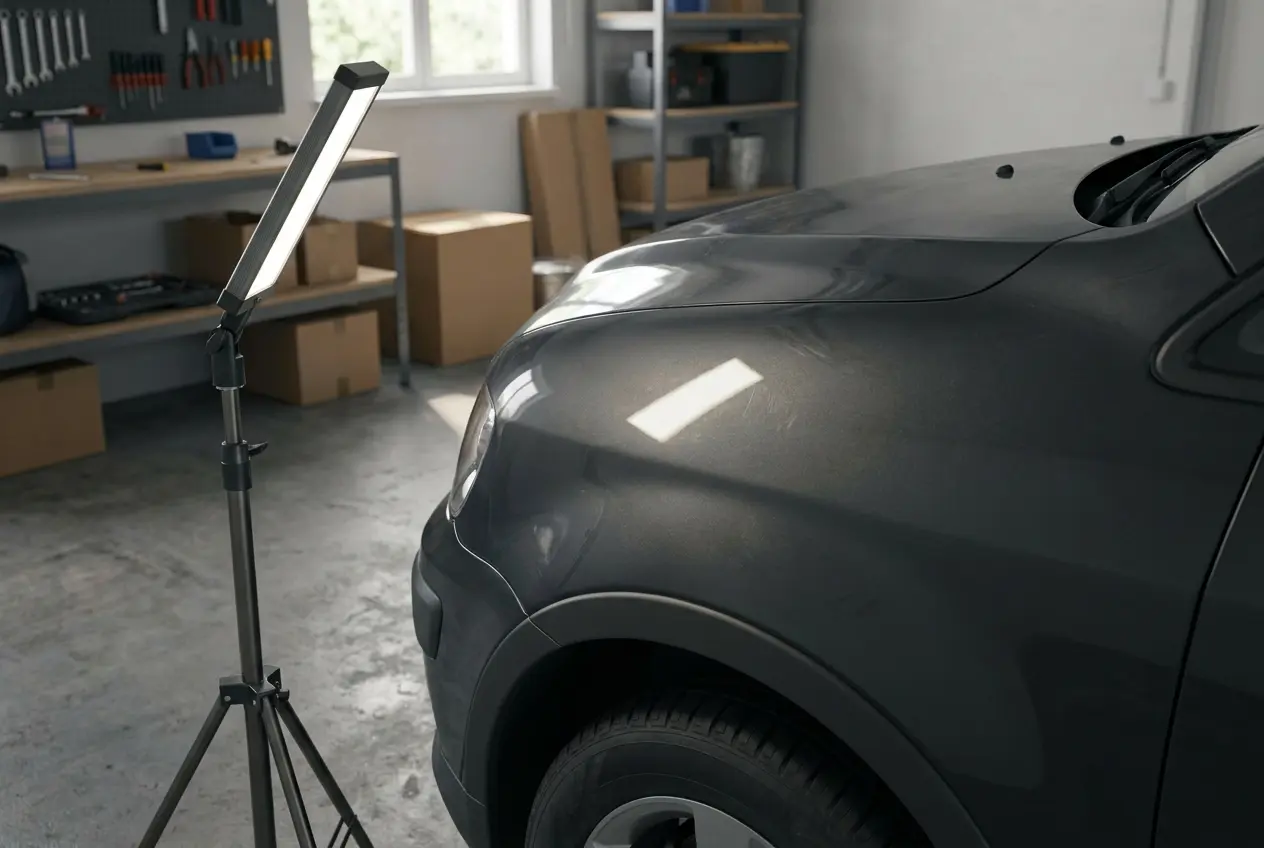
Grizzly’s polisher manual explains that compounds can behave differently on different surfaces. It recommends a test area, the least abrasive combination that works, and checking the result under light from several angles (Grizzly T33305 manual, printed page 16).
Use the test to talk about the look you’d be happy with. It can’t promise every panel, repair or uncertain area will respond the same way, so ask what other inspection is needed and how surprises would change the scope.
Be specific about the marks that might remain. You might say: “I’d like the overall appearance improved, but I’m fine keeping isolated marks if chasing them isn’t suitable.” Another owner might want to discuss further refinement, as long as there’s a sound basis for it. Neither goal needs a removal percentage attached.
A whole-car reflection photo is nice context, but it doesn’t measure defect removal. Agree how the finished work will be reviewed and which limits will be written down. For help describing swirls, scratches and other visible problems, see our guide to what polishing can improve.
Compare two scopes, not two impressive names
Here are two hypothetical scopes (not ZNT packages).
Scroll to see all columns.
| Question | Scope A: one polishing stage | Scope B: separate correction and refinement |
|---|---|---|
| What’s the goal? | An agreed improvement in overall appearance from one suitable polishing stage. | An agreed correcting step, followed by refining the finish it leaves. |
| Why this process? | The assessment supports the result without a separate refining step. | The assessment shows a useful role for both steps on the included areas. |
| What may remain? | Marks, noted in writing, that fall outside the agreed goal or aren’t suitable to pursue. | Marks, noted in writing, that still aren’t suitable to pursue, even with the extra work. |
| What’s excluded? | Restricted or uncertain surfaces, identified before work starts. | The same. Extra stages don’t lift those restrictions. |
| What else should be spelled out? | Prep, included areas, final protection (if any), review and aftercare. | Same as Scope A. |
Scope B is only worth it if the extra step serves a goal you care about and suits the finish. Scope A may fit a more modest improvement. If neither quote settles whether the work is suitable or what to expect, more assessment, or skipping correction for now while you keep up basic care, can be the sensible next step.
If a quote promises a removal percentage, ask what’s being counted and how the result will be judged. A number without a defined scope and a way to check it doesn’t tell you which marks will remain or whether the work is appropriate.
Also ask what happens if inspection changes the plan: which areas would be excluded, what extra work would be proposed, and when you’d approve any change. For comparing price and scope more broadly, see our guide to comparing detailing quotes.
Compare the work beyond the stage count
Aim for a look you can maintain
Las Vegas wind can bring blowing dust and sand (NWS Las Vegas climate overview). That’s a good reason to talk about care, not to polish more often.
Talk about how you use the car and how it gets washed before setting an appearance goal. If you want an everyday car to look better but don’t want to chase every visible mark, say so. Ask for washing and drying instructions that suit the finish, what protection is included, and any early care restrictions. Between visits, keep your care supplies clean and handy, with a clean place to store them and a routine you’ll actually follow.
Ask ZNT for an assessed correction quote
ZNT’s published Paint Correction service describes multistage polishing, decontamination and clay treatment (ZNT service overview). Its terms also say correction can’t fix every imperfection or damage, and that results vary with condition and previous maintenance (ZNT’s result limitations).
Ask which process is proposed for your car and why, which areas or marks may remain, and what protection and aftercare are included.
Request a Paint Correction assessment and current quote from ZNT. Include your vehicle, what you know about the finish and any repairs, the marks you’d like to discuss, your location and the level of improvement you’d be comfortable maintaining.