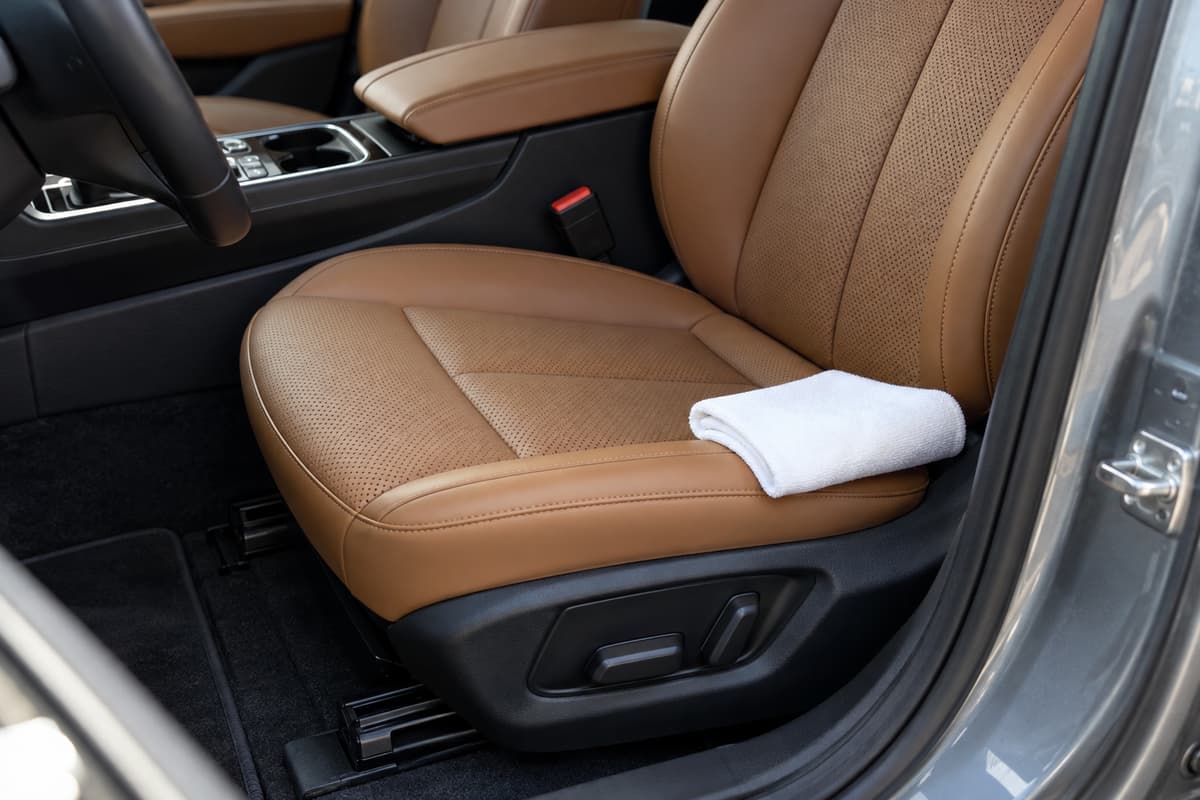
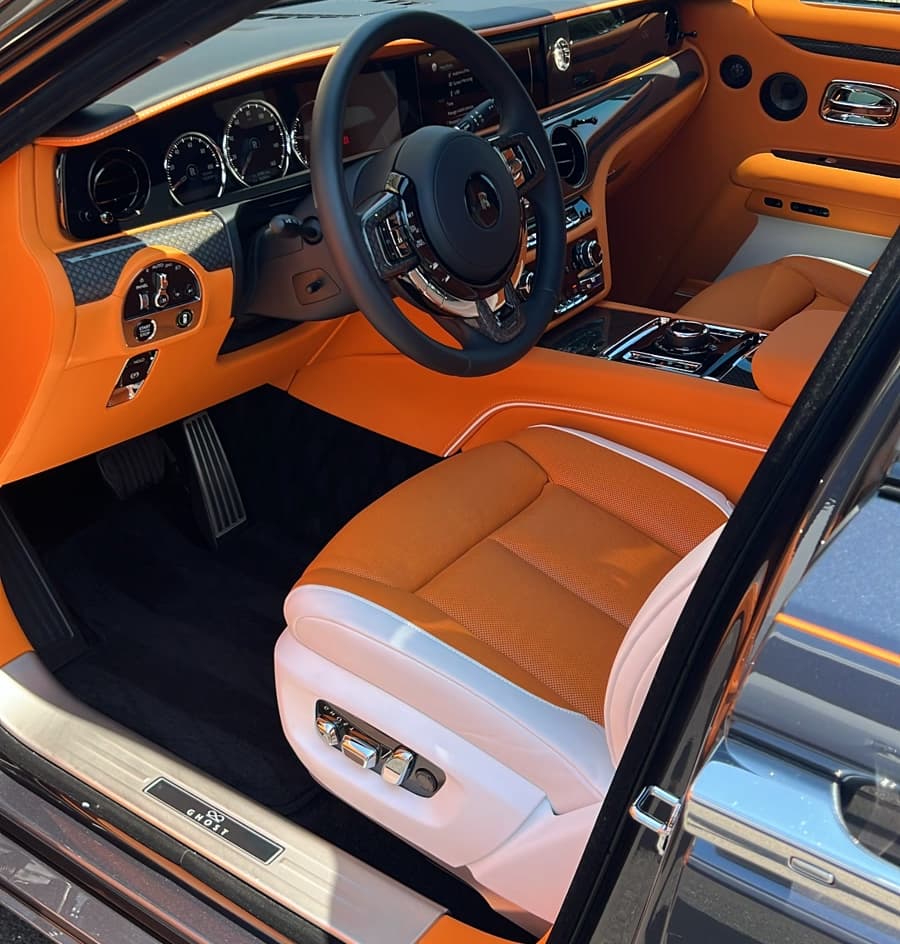
If there’s light dust on an Alcantara surface you’ve identified and it’s in good shape, start with the gentle routine care allowed for that material and that part of the car. A localized stain, an unknown covering or a surface that changed after cleaning is a different situation. More pressure, moisture or product isn’t the automatic next step.
That matters in a cabin with soft seat inserts, a steering wheel you touch constantly and controls right beside it. Fabric-care instructions alone don’t mean every installed part can be treated the same way.
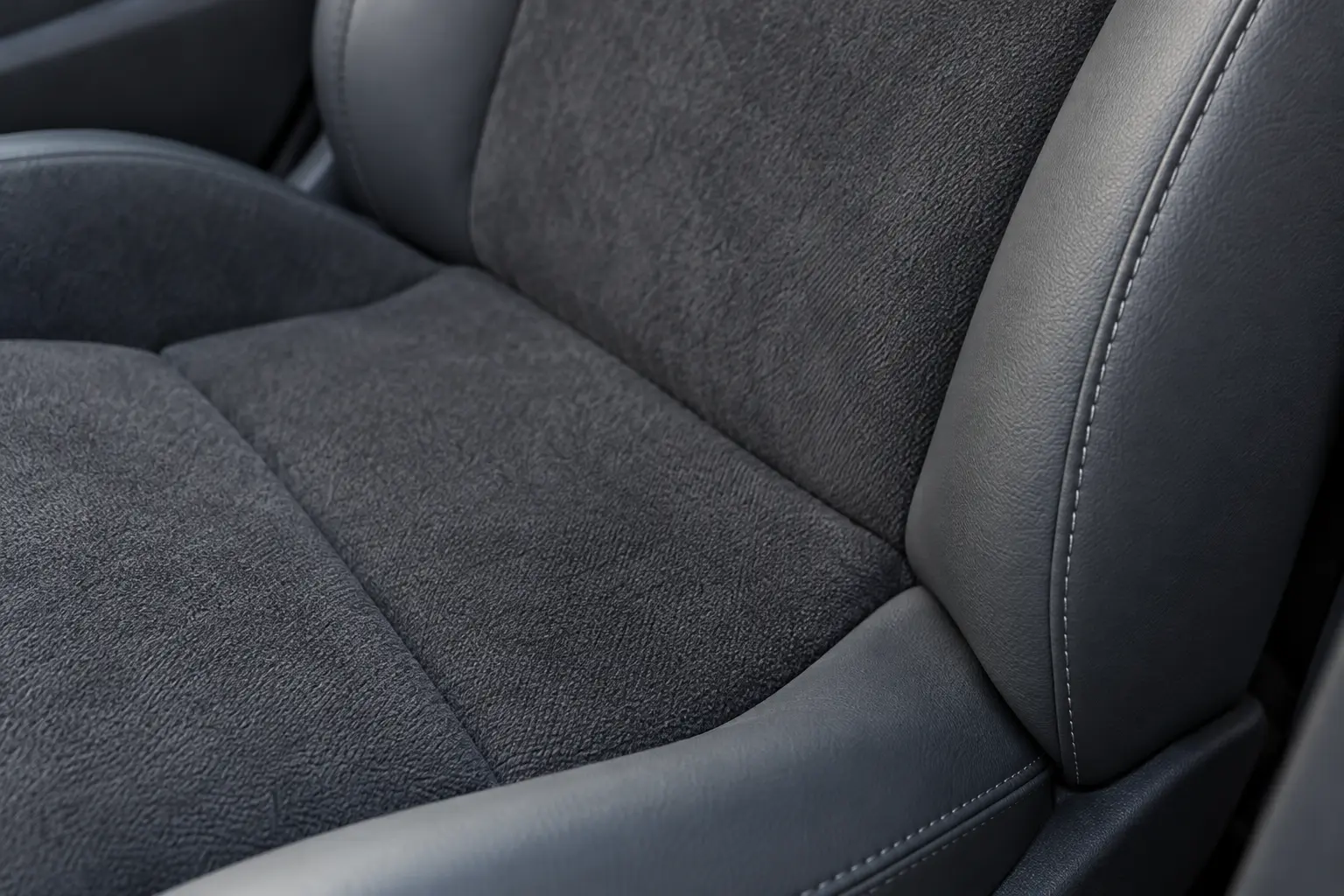
First, confirm the material and the part
Alcantara is a specific registered material name, not a catch-all for anything that looks like suede. Its maker’s maintenance guide covers the material across several uses, including car upholstery.
Check the documented upholstery or replacement covering, then find the instructions for the exact area; a seat insert, door panel and wheel rim can need different handling, even in the same car. If the wheel has been retrimmed, the installer’s material record matters. Our leather and synthetic-seat guide covers the full identification process.
Keep two questions together: What is the covering, and what care is allowed on this particular part? If you can’t answer either one, ask the vehicle manufacturer or the covering supplier before you try any stain treatment.
Check the covering, part and condition
Routine dust: keep it gentle
Alcantara’s routine guide describes gentle dust removal with a soft brush, a dry cloth or a vacuum (Alcantara routine cleaning). Its weekly-care section adds a slightly dampened white cotton cloth after dusting, warns against printed absorbent materials that can transfer ink, and discourages vigorous rubbing.
A brush from a detailing kit isn’t necessarily soft enough for your surface. Don’t swap in a stiff shoe brush, a powered scrubber or a stronger cleaner to make routine dusting more thorough. For loose dust with no stain or surface change, compatible maintenance may be all you need; there’s no reason to turn it into a deep-cleaning job.
A spot or stain needs a different approach
Note the exact panel, what touched it and when, and what’s already been put on it. If you don’t know the substance or history, say so. Take a wider photo to show where it is and a close one to show what it looks like.
Scroll to see all columns.
| What you see | Sensible next step |
|---|---|
| Loose dust on an intact, identified surface | Check and follow the approved routine-care method. |
| A known spill in one spot | Match the substance, covering and part to the relevant stain guidance. |
| A mark that won’t budge, changed texture or unknown history | Stop experimenting and ask whether more cleaning makes sense. |
For identified Alcantara, the maker’s general stain precautions include not pouring cleaner directly onto the surface and not rubbing a spill deeper or wider (Alcantara stain guidance). From there, its guide splits treatments by substance; there’s no single recipe for every mark.
If you can’t find a suitable method, ask for guidance rather than improvising a chemical mix. Missing the chance to clean it up early doesn’t, on its own, mean a stain is permanent. If liquid got into a perforated seat or may have soaked below the covering, our perforated-seat spill guide covers that separately.
Treat the steering wheel separately
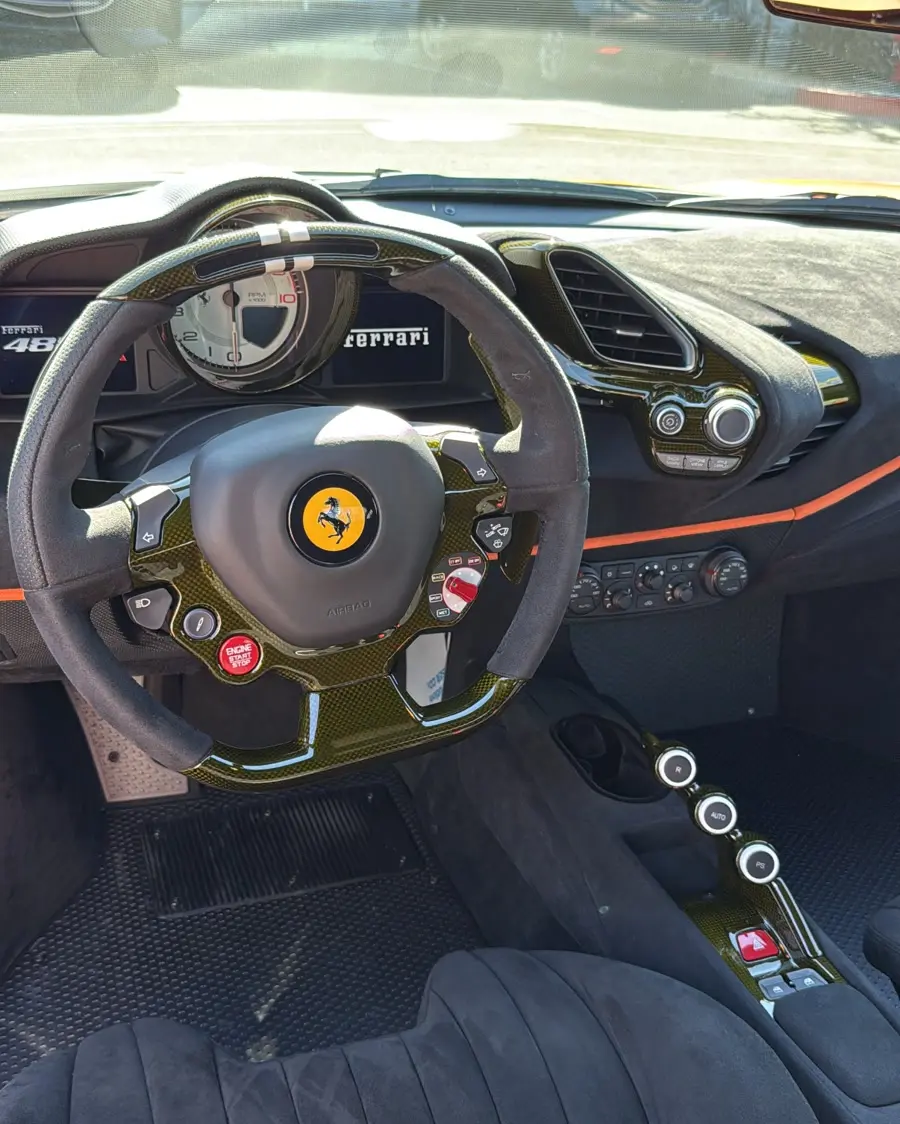
A shiny, flattened or darker area on a wheel isn’t proof that it’s just hand oil, that the fibers are worn or that a certain cleaner will bring it back. One manufacturer example shows why part-specific instructions matter. The 2022 Ford GT Canada/US manual (December 2021 first printing) treats Alcantara separately from commercially available leather and vinyl cleaners. Its nearby warning for the steering wheel and instrument panel prohibits chemical solvents and strong detergents because of possible airbag-system contamination (Ford GT manual, printed pages 175–176). The material stain table doesn’t override that warning.
When you ask for help, mention the documented material, any retrim, products you’ve used and any change in look or feel. If an attempt changes the surface or leaves it feeling different, stop and get guidance before going further.
Steam, washing and other limits
Alcantara’s routine guide doesn’t recommend steam machines. Its separate washing guidance covers removable upholstery and treats it differently from non-removable coverings (Alcantara washing and application limits). That isn’t a green light to remove a car seat cover, wash a steering wheel or use a household fabric routine on the headliner.
Ask how any proposed method suits both the covering and the part it’s attached to. If moisture is involved, ask what needs to dry and how they’ll know it’s ready; a hot afternoon or a dry-looking surface isn’t the answer.
What the Las Vegas climate does (and doesn’t) change
The National Weather Service describes hot, sunny summers and bouts of blowing dust and sand in Las Vegas (NWS Las Vegas climate summary). Use that as a reason to look at what’s actually there, not to assume every dark patch is dust.
Two hypothetical situations show the difference. After a dusty drive, one owner finds loose particles on a documented, intact seat insert; the approved routine method is the place to start. Another notices a shiny patch on a much-touched wheel that won’t go away; the covering, the part’s restrictions and its treatment history need attention before another attempt.
Describe where the car is parked or will be worked on, and when you next need it. The heat isn’t a reason for more aggressive treatment.
What to ask ZNT
ZNT’s Mobile Detailing Service includes interior vacuuming and surface cleaning. Ask which tasks and methods suit your car’s materials. ZNT’s terms ask owners to mention known issues and state that complete stain removal isn’t guaranteed.
Send your vehicle details, the exact part, the material record (or “unknown”), photos, any stain or contact history and products already used. For a wheel, mention any change in feel. Ask which areas can be cleaned compatibly, which should be left out or assessed separately, and what may still show afterward.
Choose care from the actual concern
Loose dust on an intact, identified surface
Use approved routine care matched to the specific part.
Known localized spill
Match the exact stain guidance to the substance, covering and component.
Persistent, changed or uncertain surface
Stop experimenting. Ask whether further cleaning is appropriate.
Use our interior-detail scope checklist for the rest of the cabin. Include your location and any work-space limits, then contact ZNT for a material-aware recommendation and current quote.