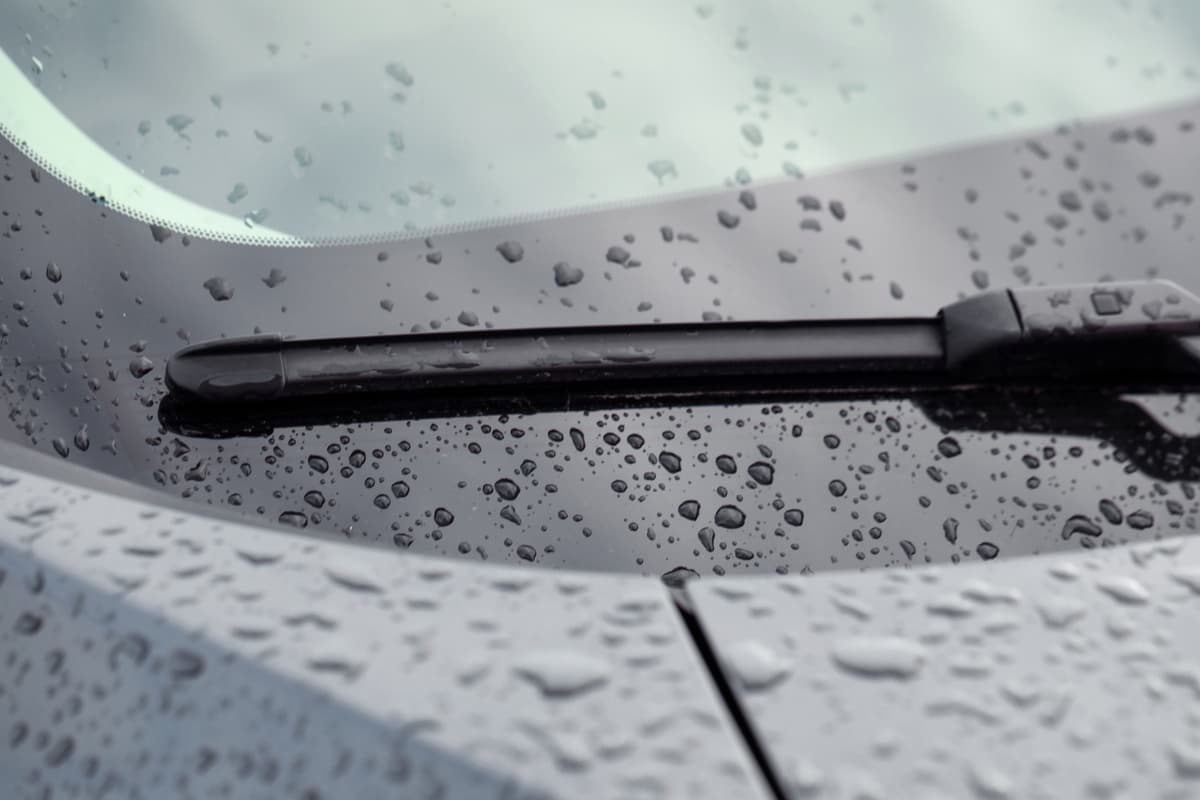
Spots still there after a proper wash? Before you reach for something stronger, figure out what surface they’re on and what protection is already there. A mineral deposit sitting on the surface and a change to the finish itself need different fixes.
You don’t need to work through a shelf of spot removers first. Note what you know, check the care instructions for that surface, and ask for an assessment if the marks stick around. One exception: if spots on the glass or a camera affect what you or the car can see, deal with that visibility problem before you drive.
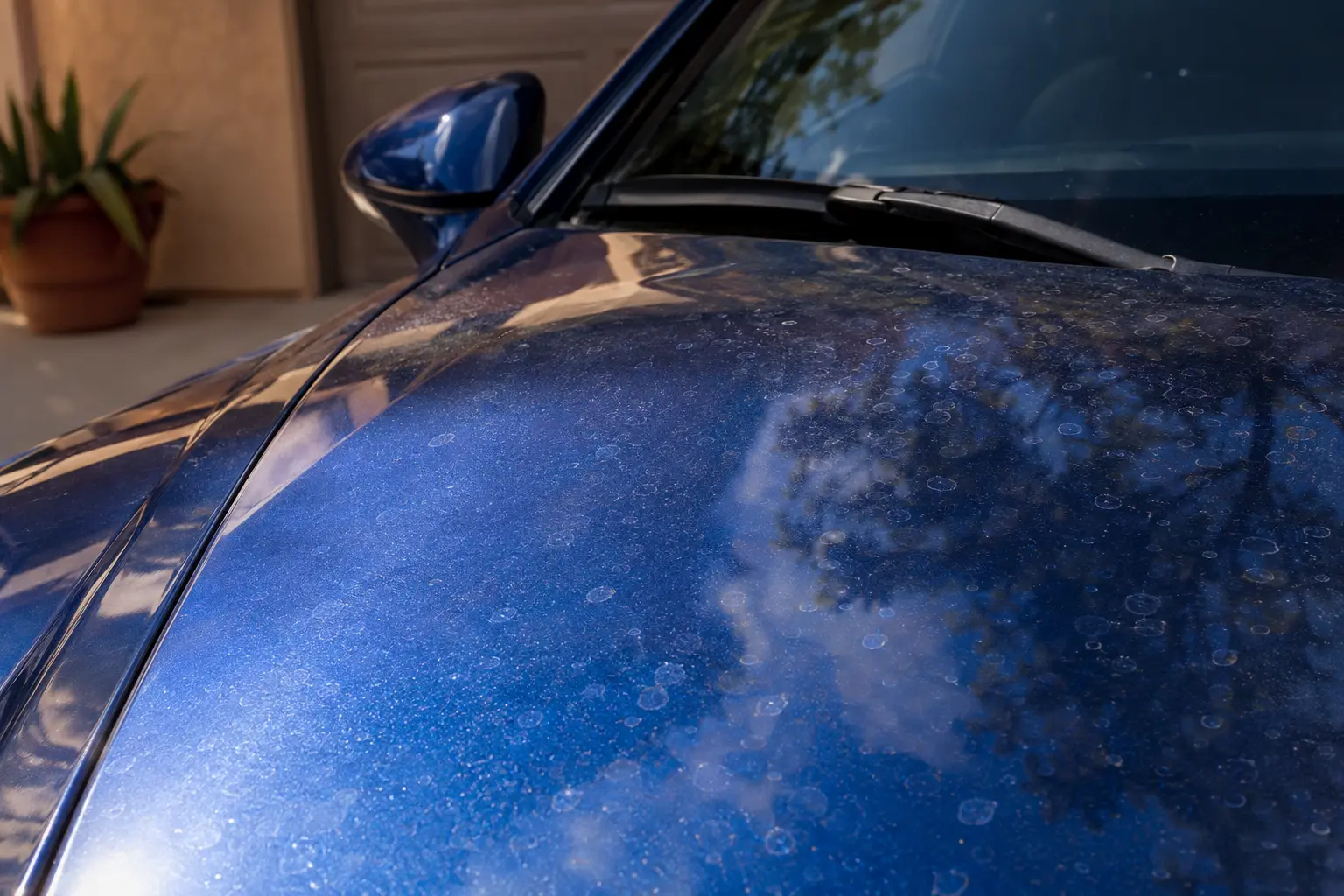
Where the water came from is a useful clue
The Las Vegas Valley Water District says calcium and magnesium are the minerals behind local water hardness, and that evaporating water can leave mineral residue behind. So recent rinse water, or a sprinkler you’ve seen hitting the car, is worth mentioning.
Think back to when you first noticed the spots. Were they there before the latest wash? Did you actually see a sprinkler reach the car? Which panels or windows are affected? Jot those down.
Say you find rings along one side of the car after several nights parked next to a watered landscape bed. That’s useful history to share.
Deposit or etching? Why the difference matters
A deposit is something left on top of the surface. Etching is a change to the surface itself. That matters because removing residue and fixing a changed finish are different jobs.
Gtechniq’s W9 product guidance is a good example: it describes W9 as a mineral remover but says it isn’t effective on deeply etched clear coat.
PPG’s DELTRON professional refinishing manual, Technical Tip 20 also separates water spotting from paint that has been etched.
On the surface, or a change to it?
Scroll across to compare all columns.
| Deposit | Etching |
|---|---|
| Material left on top of the finish | A change to the finish itself |
| Removing residue is a cleaning question | A changed finish needs a separate assessment |
Check the surface first, then the protection
A glossy panel may have film on it, and glass or film may have a coating too. “I don’t know” is a useful answer to give a detailer; how the surface looks shouldn’t decide the treatment.
Scroll to see all columns.
| Check | What to find out |
|---|---|
| Surface and finish | Is the spot on paint, glass, trim or something else? Is the finish meant to be glossy, matte or satin? Check vehicle and repair records. |
| Added protection | Is there a coating, paint protection film, wrap or window film? Find the product, the installer and the aftercare instructions if you can. |
The instructions can change your plan. Tesla’s Model 3 cleaning guidance warns against acidic cleaners and says not to scrape glass or use abrasive cleaning fluids on glass or mirrors. Hyundai’s 2025 Sonata exterior-care guidance has a separate matte-paint section that rules out polishing and abrasive products. That’s why a bottle labeled “water-spot remover” can’t tell you whether it’s right for your car.
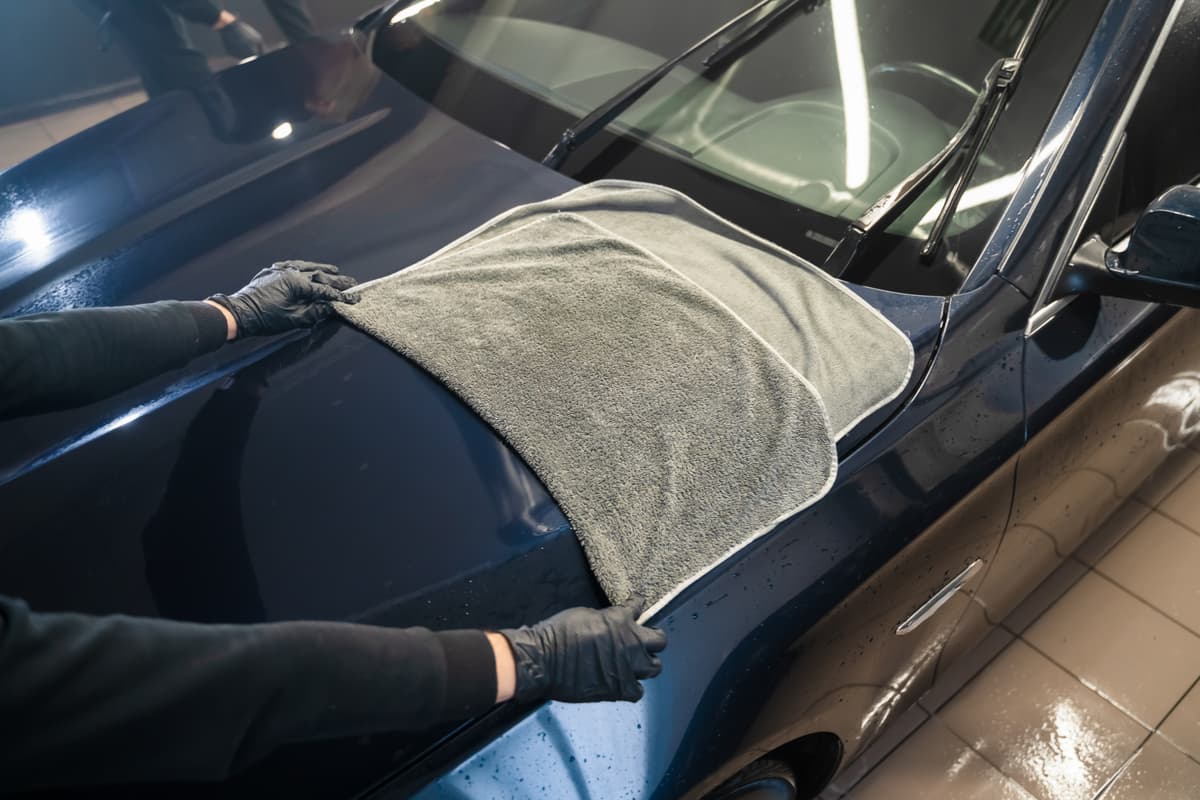
Stick to the normal cleaning and drying instructions for that surface. If you can’t tell what it is, the instructions conflict, or the marks won’t budge, ask the installer, the manufacturer or a qualified pro before trying stronger chemicals or anything abrasive. Skip the household descaler, the vinegar recipe, the scraper and the polishing experiment.
Everyday streaks and wiper smears on the glass are a different problem; our exterior-glass guide covers those.
Coated cars can still get spots
XPEL’s FUSION PLUS care instructions openly say that tap water left to evaporate can leave mineral deposits on the coating. They also warn against aggressive polishing or spot-removal products and send coated-surface questions back to the installer.
So spots on a coated car don’t, on their own, mean the coating has failed. Find the installation paperwork, explain where the water came from and what you’ve already used, and ask what care is safe and what an assessment can tell you.
Get an assessment with clear limits
Bring the details that help someone judge the next step: which parts are affected, the finish and protection if you know them, where water may have come from, and exactly what products or methods you’ve already tried. Photos help show where the marks are and how widespread they are.
Notes to bring to an assessment
Ask what the proposed approach is based on and what result to expect: removal, improvement, leaving a cosmetic mark alone, or a referral elsewhere. If they suggest treatment, ask whether a small test area makes sense, what would make them stop, and whether existing protection would need attention afterward.
PPG’s water-spotting guidance describes polishing as an option for some minor water spotting, and notes that etched surfaces may need different work. Agree on the scope and the stopping point before anyone chases every last mark. If the finish or damage is outside the proposed service, you may need a repair specialist.
For broader questions to ask a provider, see our guide to choosing a detailer.
Stop the repeat exposure and pick the right service
If a sprinkler keeps hitting the car, mention the overspray to whoever manages the property, or ask about other parking. If you can’t move, plan for regular, suitable cleaning instead of assuming moving is the only fix. Our wash-and-dry guide explains how to prevent spots during future washes.
ZNT lists Mobile Detailing Service and Paint Correction as separate services. Ask which one, if either, fits the condition once it’s been assessed, and whether any spot treatment is included or quoted separately.
Tell ZNT about your vehicle, the affected surfaces and your location. Mention any protection and what you’ve already tried, and ask for a service recommendation and a current quote. Say what result you’re hoping for.