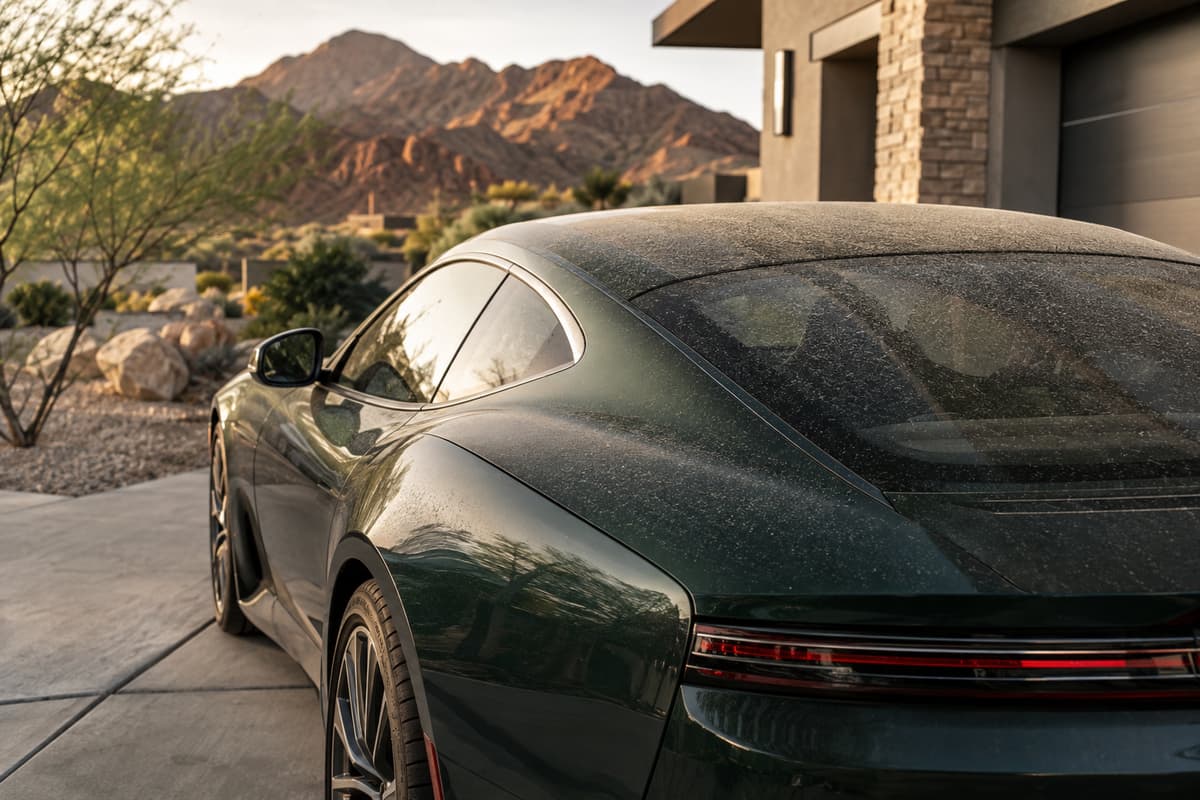
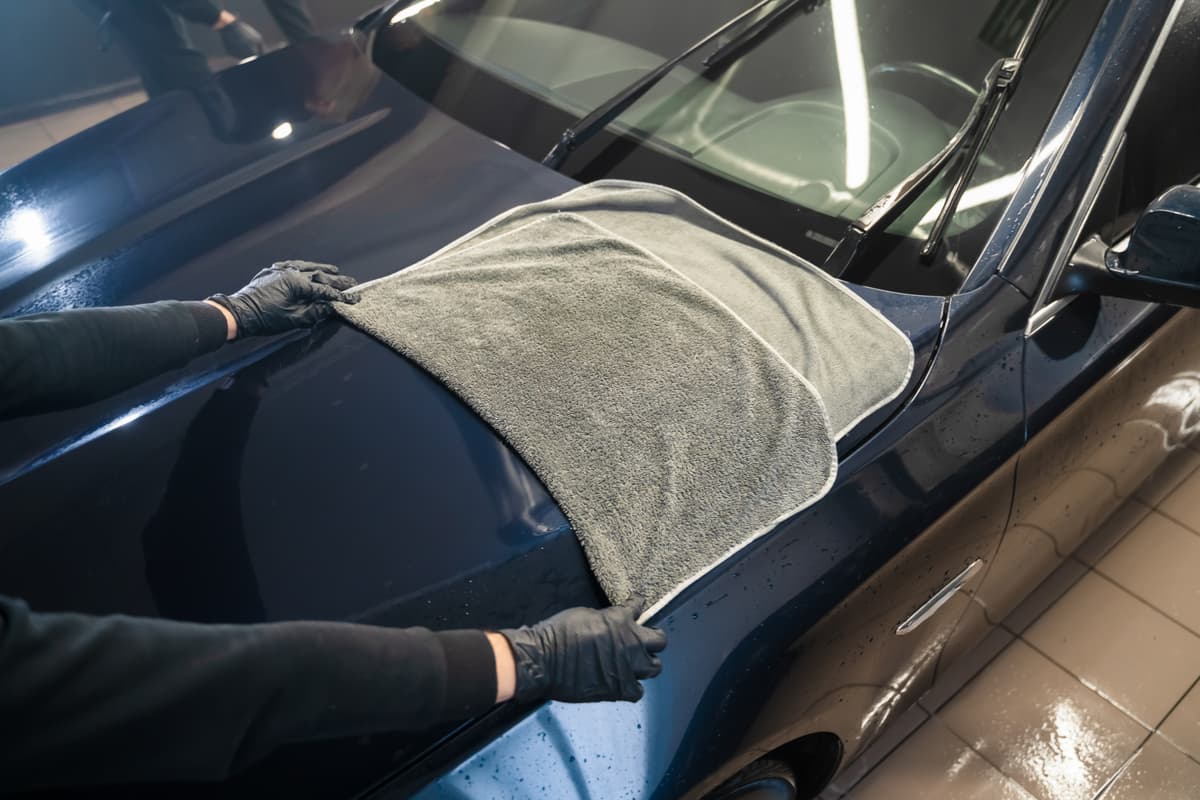
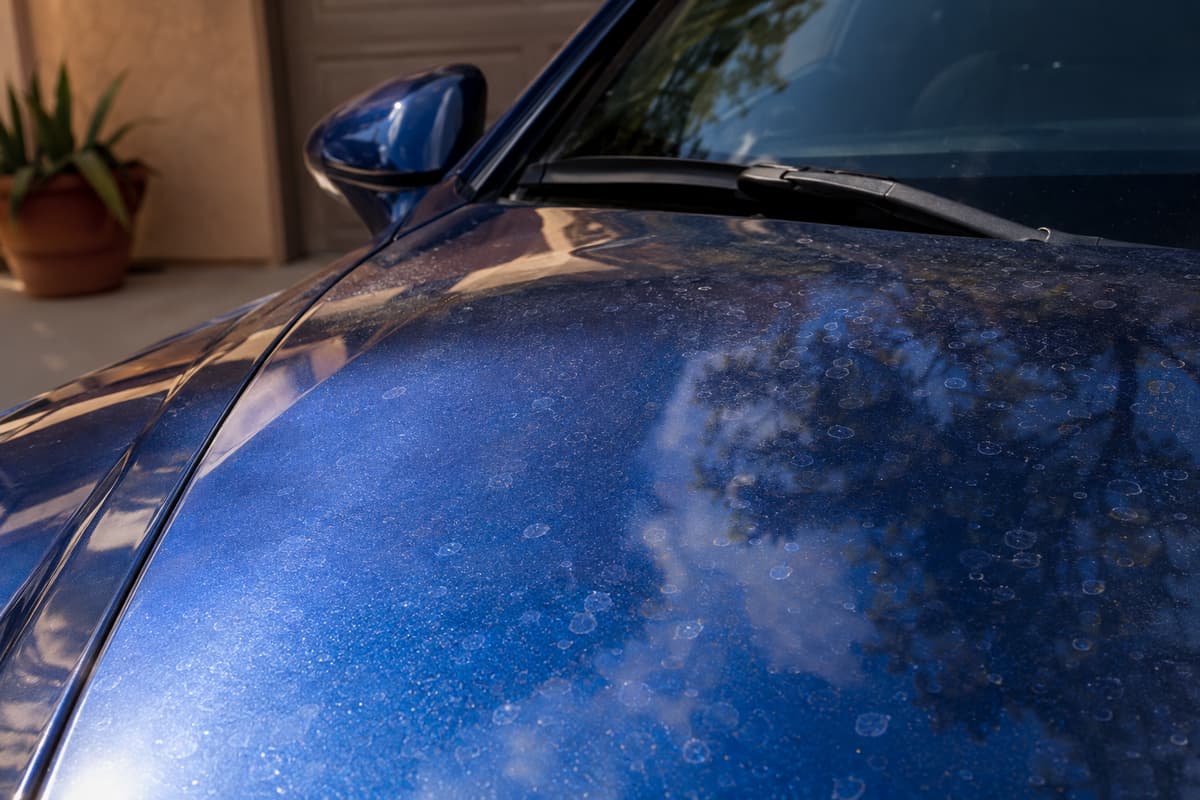
After a dusty windstorm or dirty rain, start with what happened to your car, not with a towel. Look at what you can see from a safe spot, check whether water got inside, and keep exterior cleaning separate from anything that needs a proper vehicle check. A car can have ordinary dirt and a bigger problem at once.
Safety first: known flooding or submersion, visible damage and concerns about the car’s systems come before any cosmetic cleanup. Don’t wade into floodwater, and don’t start, test, charge or move a car you’re worried about to work through this checklist.
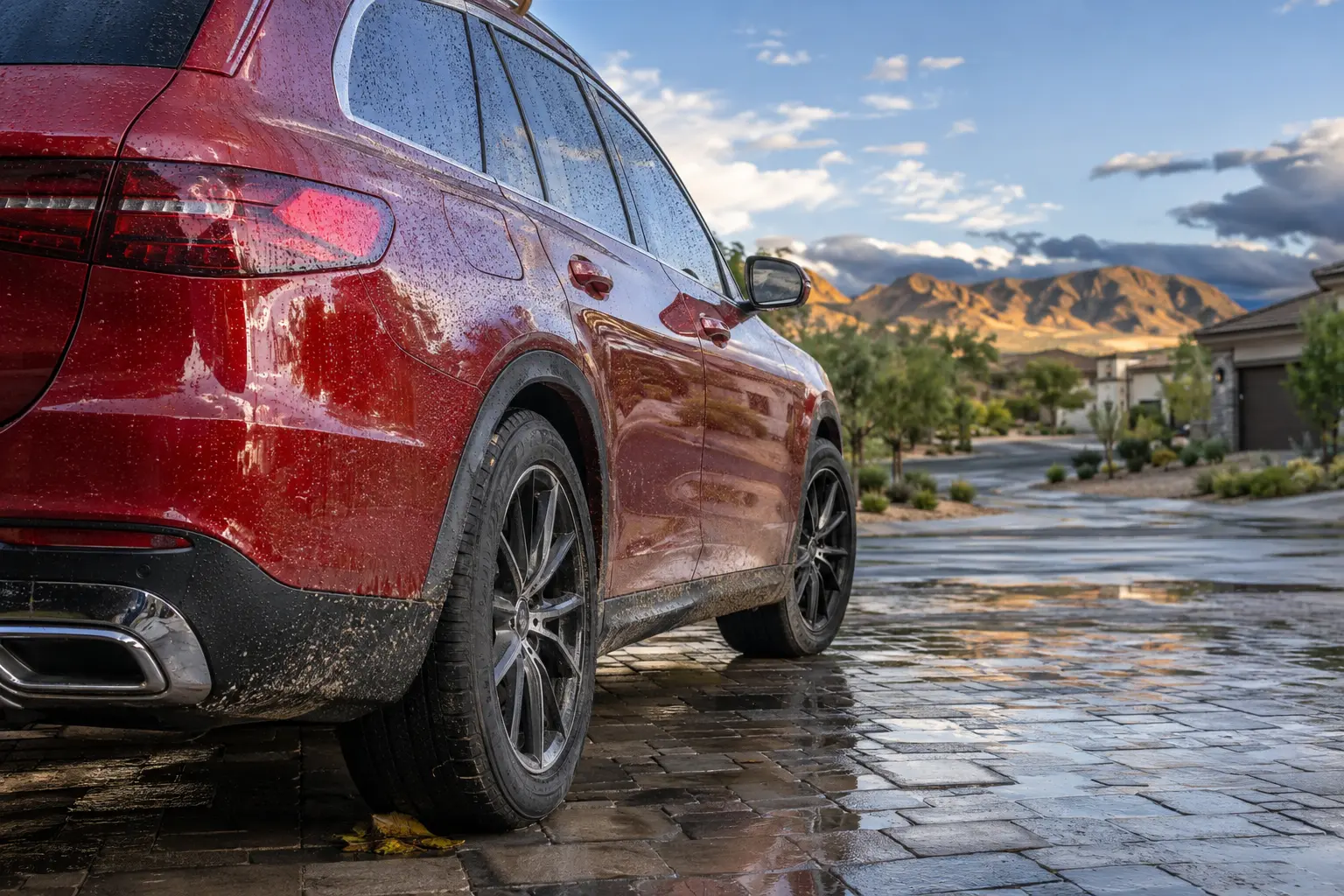
The National Weather Service’s local climate summary describes windblown dust and sand in Las Vegas, plus summer monsoon thunderstorms that can bring gusts and heavy rain. What matters is what happened to this car, where the residue or wetness is, and what you still don’t know.
1. Note what happened before you book anything
Work with what you already know or can see. There’s no need to touch deposits, open compartments, poke at drains or test electronics to fill gaps. “Unknown” is a useful answer.
Scroll to see all columns.
| What you know or can see | What to ask next |
|---|---|
| Known flooding or submersion, damage, or concerns about the car’s systems | What do the manufacturer or a qualified provider need before anything else is done? These come first. |
| Rain got in through an opening, or the cabin is damp | Where did it get in, what’s affected, how long has it been wet, and what have you tried? If the source, extent or ongoing dampness is unclear, get it assessed. |
| Specks, grit or dried runoff on the outside | Once the issues above are handled, what complete cleaning method suits this car and its finish? |
| A hot surface or a poor place to work | Where and when can the full wash, rinse and dry be done properly? |
More than one row can apply. If you already have photos taken from a safe spot, they can help describe the affected areas.
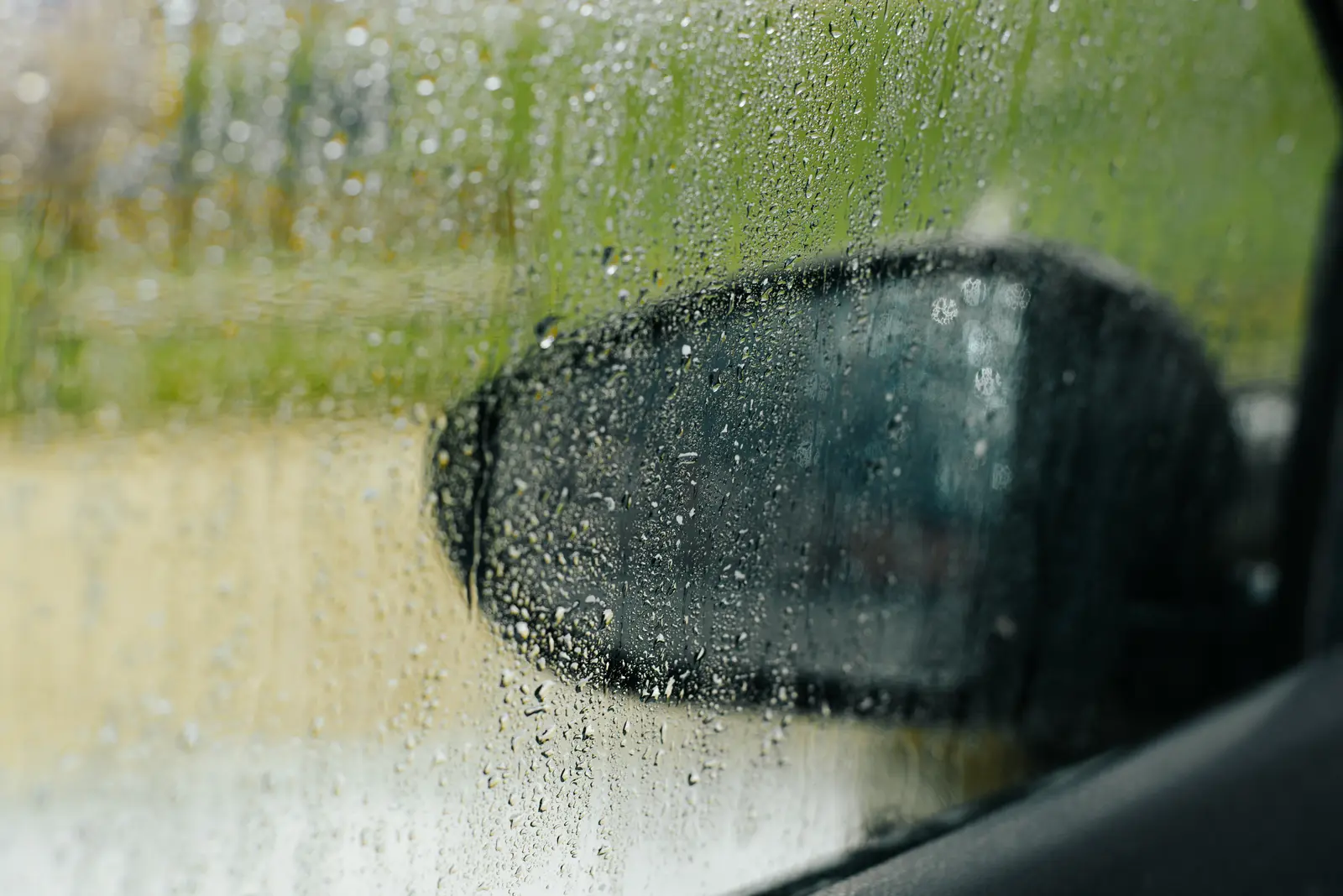
Picture two cars caught in the same rain. One owner sees dirty runoff on the outside; the other finds rain came in through an open window. Same weather, very different questions.
Same rain, different questions
Scroll across to compare all columns.
| Dirty runoff outside | Rain entered the cabin |
|---|---|
| Describe the residue and affected panels. | Describe the entry point, affected areas and how long they have been wet. |
| After bigger concerns are handled, plan compatible exterior cleaning. | Unclear source, extent or continuing dampness needs suitable assessment. |
2. Water inside is a separate problem
A wet seat after an open window isn’t, by itself, a sign the car was submerged. Note where the water got in, what’s wet, how long it’s been wet and what you’ve tried. If you’re unsure about the source, the extent or whether it’s still damp, get an assessment suited to the car and its materials.
Keep flood guidance in context. On Tesla Support, the instructions for prolonged submersion require an inspection by an authorized shop before the car is used again.
Don’t assume desert heat, a dry-looking surface or another round of shampoo means the interior is done. The US Model 3 manual warns against over-wetting carpets and letting fluids into restraint mechanisms. Ask the right provider what assessment and treatment your car’s materials need, rather than picking a stronger cleaner or trusting a promised drying time.
3. Don’t reach for a towel
A car washed yesterday can still need a full clean today. Recent wax or protection doesn’t mean fresh specks and dried runoff are ready to wipe away. Describe what you see, such as “tan specks along the lower door” or “dried streaks below the mirror,” without deciding from looks alone that it’s harmless dust, mineral residue or damaged paint.
The Hyundai exterior-care manual warns against dry-wiping dust or dirt, and the US Tesla Model 3 washing sequence removes grime and grit before any contact washing.
For storm buildup, skip the improvised fixes: no dry towel, sweeping brush or quick-detailer shortcut. Plan a complete, compatible clean once the bigger concerns are dealt with. For ordinary dust between washes, our light-dust guide covers that.
4. Plan the whole wash before you start
Check the care directions for your car, its finish and any protection. Make sure the surface is cool and you have a spot where the whole method can be finished. Shade or a better time of day can help.
Grit packed near a seam isn’t a reason to hit it with a stronger jet. Hyundai’s care guidance includes restrictions around cameras, sensors and connectors, and the Model 3 exterior cautions say not to aim hoses at seals and electrical components. Don’t let this cleanup turn into probing drains or washing under the hood.
Our guide lays out the complete wash, rinse and drying plan. If you can’t finish the permitted method yourself, arrange help before you start. If cleaner is already on the car, follow its removal instructions promptly, and check with the maker if you can’t finish.
5. Check what’s left, then get the right help
If rings or streaks remain after a proper clean, that’s a reason to take another look, not proof of etching, hard-water minerals or failed protection. Note where they are and what you used. Our persistent-spots guide walks through the next decision. Don’t jump to stronger chemicals or polishing on a guess.
For the cosmetic side, ZNT’s Mobile Detailing Service brings exterior hand washing and interior care together. Say whether you need help with exterior dirt, dry dust in the cabin or both. Unresolved water entry, flooding or concerns about the car’s systems need the right assessment first. Don’t assume an ordinary detail includes leak repair, flood restoration or electrical work. ZNT’s service terms also cover the car’s condition, work-site suitability and limits on results.
Once those concerns are handled, send ZNT the details: your vehicle and its finish if known, what it was exposed to, the affected areas, what you’ve already tried and your location. Ask for a cosmetic-service recommendation and a current quote, mention anything you still don’t know, and ask whether the proposed work area and scope are suitable.