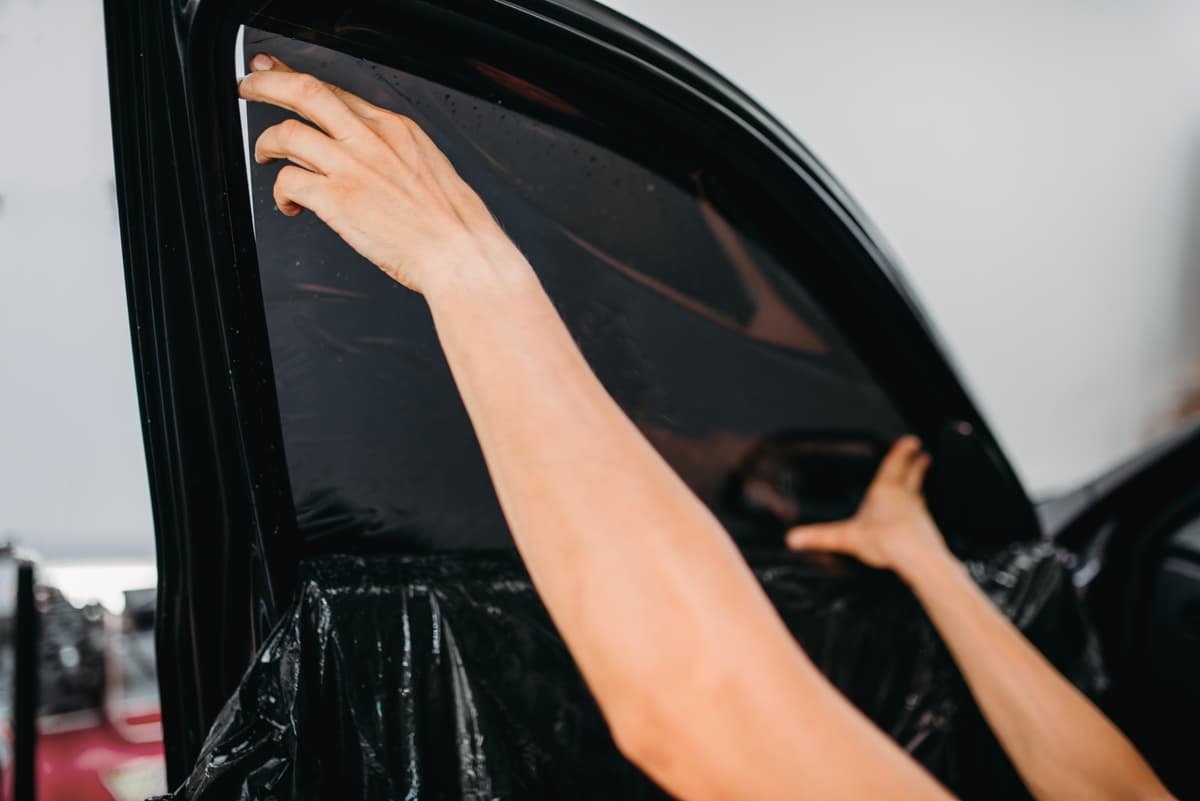
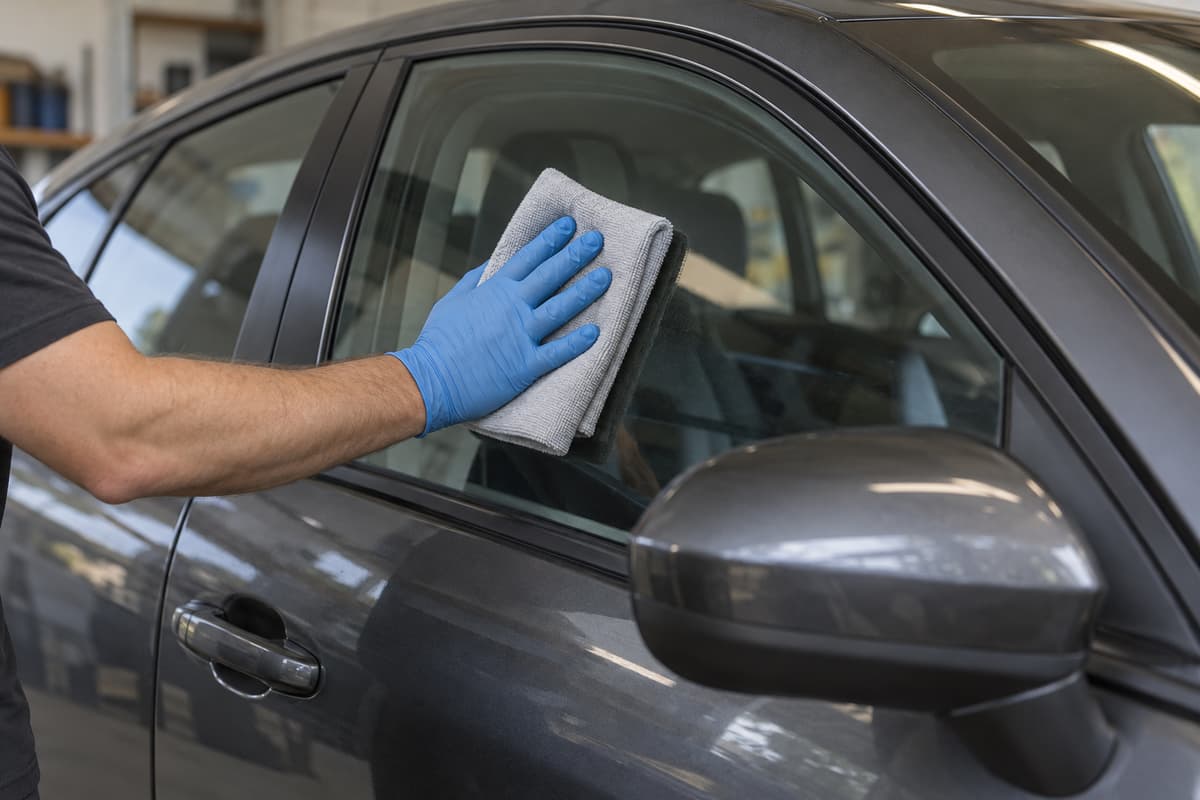
New tint needs the care instructions for the specific film on your car. Split them into three questions: when can the windows go up and down, when can you clean the filmed surface, and what should you expect while the film dries? One waiting period doesn’t answer all three.
If a new mark, a lifting edge or a change in visibility worries you, leave it alone and contact the installer. If you can’t see well enough to drive safely, don’t drive and don’t wait for an estimated cure date; get it looked at promptly and arrange a safe way to get help.

Keep the film details with the care instructions
Save the installation date, film brand and product line, which windows were tinted, the installer’s contact details, the written care instructions, the receipt and any warranty documents. “Ceramic tint” alone may not identify the product well enough to find its care guidance, so ask for the product details if you didn’t get them.
Keep the instructions where anyone who drives the car can find them. Someone borrowing it or taking it for a wash should know which windows have restrictions and when those end. A written sheet beats remembering that someone said “a few days.” For paperwork and coverage, see our window-tint quote and warranty guide.
Keep product details with the instructions
Keep the actual installation details accessible to every driver.
Ask three timing questions
Write down each answer separately, with any conditions the installer gives:
Scroll to see all columns.
| Question | What to pin down |
|---|---|
| When can the windows move? | The restriction on opening and closing each tinted window. |
| When can I clean the filmed surface? | When the first cleaning is OK and what materials you can use. |
| What changes in appearance should I expect? | What to watch for, when to check back and what should prompt an earlier call. |
To show how this varies: the 3M Automotive Window Film Product Care Guide says to wait at least 48 hours before opening, closing or cleaning the windows, while XPEL’s PRIME care guidance gives roughly one to five days before lowering or cleaning, depending on climate (3M care guide · XPEL PRIME care).
If your instructions don’t match the manufacturer’s guidance for your film, ask the installer to sort it out before you use or clean the windows. Ask specifically about the rear defroster and any windows that drop automatically when a door opens; a generic “wait X days” may not cover those. Our appointment-timing guide helps you plan around when you’ll next need the car.
Las Vegas heat isn’t a readiness test. The National Weather Service describes seasonal temperature swings and higher summer humidity from monsoon moisture (NWS Las Vegas climate). Tell the installer where the car actually parks. And don’t use a heat gun, hair dryer or other heating to speed things up.
Three questions, three separate answers
Confirm the applicable instruction and conditions for each question.
Clean only when your instructions say it’s OK
First, figure out which side has the film. LLumar’s automotive FAQ says film is typically applied to the inside of the glass (LLumar automotive FAQ), so washing the outside and touching the filmed surface are different things. Before a full car wash, tell the provider about the new tint and its restrictions, including window movement and cleaning inside glass.
Once your instructions allow cleaning, keep it simple:
- Check your materials. Use the cleaner and type of cloth allowed for your film. Don’t assume a familiar household product is OK just because it worked on untinted glass.
- Start with clean, nonabrasive supplies. Check the cloth and water for grit, and set aside any cloth that’s dirty or unsuitable.
- Follow the film’s cleaning directions gently. Keep your car’s instructions for nearby trim, electronics and rear-window parts in mind.
- Stop if a mark makes you wonder. Describe it to the installer instead of rubbing at it to figure out what it is.
For reference, the 3M card calls for soft, nonabrasive materials, clean water and a nonabrasive, pH-neutral glass cleaner. For PRIME, XPEL specifies a microfiber cloth slightly dampened with water and, if needed, a mild, non-ammonia glass cleaner (3M cleaning guidance · XPEL cleaning guidance).
Leave edges and unfamiliar marks alone
Aftercare isn’t do-it-yourself repair. Don’t scrape a spot with a blade, poke a bubble, press it flat, peel back an edge or try to smooth it out with a squeegee. Keep solvents, polishes and heat tools out of it, too. If an edge looks different or a mark won’t go away, just note which window and where.
Permission to clean is not permission to repair
Follow the actual film instructions. An unfamiliar mark or edge takes the concern route even when routine cleaning is allowed.
Routine cleaning is allowed
Use only materials allowed for the actual film, begin with clean nonabrasive supplies, and follow the cleaning directions gently.
The mark or edge is unclear or concerning
Hold optional cleaning and stop manipulating it. Note the window, location and any change; contact the installer for guidance and assessment.
The view is inadequate
Do not drive. Arrange prompt help.
Describe a concern without diagnosing it
XPEL notes that PRIME can show some initial haze or moisture bubbles for up to ten days (XPEL drying observations). Don’t use that number as a reason to delay calling about something that’s getting worse or affecting your view.
Contact the installer about a lifting edge, a crease, anything getting worse, or anything still there after the timeframe you were given. Ask whether the car needs an in-person look and what to do meanwhile.
A helpful message covers the affected window, installation date, when you first noticed the issue, whether it’s changing and what instructions you got. Add an overview photo and a closer one, taken while parked, without pressing or moving the film. Mention any cleaning or anything else you’ve tried. Keep the reply and agreed next step with your installation records.
Describe the change without diagnosing it
Share the concern with your installation record and the instructions you received.
Follow up with your installer
If ZNT did your tint, ask ZNT for the applicable care guidance and how inspections are arranged. Its published terms ask customers to inspect completed work and report concerns, and they tie warranty commitments to what’s expressly provided in writing (ZNT service terms).
If your original installer isn’t available, use the film manufacturer’s care or support information and get a qualified assessment of anything unresolved; confirm whether another business can help and what it will take responsibility for. Until your instructions are clear, hold off on optional cleaning and don’t handle the film.
When you use ZNT’s contact form, lead with your installation details and your specific question: window use, first cleaning or a change you’d like checked.