Before you pick a window tint quote, get the windows, film and any old-film work in writing, then read the warranty that applies to that installation. Two offers that both say “ceramic tint with a lifetime warranty” can still cover different work and make different promises.
If you’re shopping for more comfortable daily driving in Las Vegas, the real question is what each quote includes for your car and your priorities. A lower total can be a smart choice when its smaller scope is what you want, but an unexplained price gap needs an answer before you decide.
Name the windows and the film before comparing prices
Send each installer your car’s year, make, model and body style, whether it already has film (or that you don’t know), and which windows you want looked at. Rather than relying on “full car,” ask the installer to list:
- The front and rear side windows, including any fixed or quarter windows your car has.
- The rear glass.
- Any windshield work they’re proposing, as a separate item and a separate legal question.
- The sunroof or panoramic roof, if you want it considered, listed apart from the other glass.
For each area, ask for the film manufacturer, exact product line and proposed shade, and whether it’s included, excluded or priced separately.
Put each glass area in the quote
Identify the vehicle, year and body style. For every area, confirm whether it is included, excluded or priced separately, the manufacturer, film line and shade, and any existing-film work.
A true apples-to-apples comparison keeps the product and work the same. You can also compare different films on purpose: make the difference clear, then decide whether the alternative gives you something you value. Our guide to whether ceramic tint is worth it helps with that choice, and our shade and night-visibility guide covers your viewing priorities.
Keep the legal question separate from the warranty, too. Go through our Nevada tint checklist with the proposed work for each window.
Turn a vague offer into one you can compare
Here are two made-up examples. There are no prices, because the point is to spot differences before comparing totals.
Scroll to see all columns.
| Quote detail | Offer A | Offer B |
|---|---|---|
| Product | “Ceramic tint” | Exact film line and shades identified |
| Glass | “Full car” | Side windows and rear glass listed; windshield and roof excluded |
| Existing film | Not mentioned | Needs an assessment; removal estimated separately |
| Warranty | “Lifetime” | The written terms that apply, provided for you to read |
Different words can hide different work
Two hypothetical descriptions show why the details matter. These are not actual quotes or prices.
Scroll across to compare all columns.
| Quote detail | Offer A | Offer B |
|---|---|---|
| Product | Ceramic tint | Exact film line and shades identified |
| Glass | Full car | Side and rear glass listed; windshield and roof excluded |
| Existing film | Not addressed | Assessment required; removal estimate separate |
| Warranty | Lifetime | Applicable written terms supplied for review |
Offer B is easier to judge. Ask A for the missing information, and ask B what the removal assessment could change. If you only want side and rear glass, B’s exclusions may suit you fine. If another area matters, ask both installers to revise their quotes. And if an important question still has no answer, hold off.
Give old-film work its own line. Ask whether removal and prep are included, what needs inspecting first, and how any extra work they find would be priced and approved. Mention known peeling, earlier removal attempts or glass concerns.
Finally, confirm the expected total for the agreed work, including any other charges, and how changes get approved. Removing old film before a new installation is a different question from who pays to remove film if a warranty claim is accepted later, so don’t let one answer quietly stand in for the other.
Read four parts of the warranty
“Lifetime” is where the conversation starts, not where it ends. Ask for the actual warranty document for the named product and installation, then read these four parts together:
- Who covers which problem? Find out who the warrantor is and which defects are covered. Ask separately who handles installation complaints, such as alignment or visible contamination, and under what written terms.
- Whose lifetime, and who qualifies? Check the stated length of coverage, ownership conditions, transfer rules and exclusions. If you plan to keep the car for years, know what ends the coverage.
- What records or registration are required? Find out who completes any registration, the deadline and what confirmation you’ll get. Keep the exact product and installation record.
- What happens if a claim is accepted? Ask about removal, replacement film and installation labor separately. Check whether the fix covers only the affected area, who chooses the replacement and which costs aren’t included.
Read the warranty as connected parts
Use the document that applies to the named product and installation.
Two manufacturer examples show why these questions matter. The 3M automotive warranty card we reviewed in October 2026 is a US/Canada warranty for the original consumer and can’t be transferred. It requires a completed warranty card and the original invoice. For a covered defect, it provides replacement film and reapplication labor; removal isn’t listed as a separate item.
LLumar’s FormulaOne Classic coverage summary, by contrast, advertises transferable limited lifetime coverage while directing buyers to a dealer for restrictions. “Lifetime” alone doesn’t tell you whether coverage transfers.
Also find out how you’d get a problem fixed: who to contact first, what to send, what happens if the installer isn’t available, and whether you need approval before another shop starts work. The 3M card, for example, sends the owner to the installer first, then to 3M if the installer isn’t available, with an inspection and claim decision before the stated remedy (3M claim instructions).
Confirm the location and the paperwork you’ll get
Tell the installer how you use the car and where it’s parked in Las Vegas, then confirm where the installation will happen. Whether it’s a driveway, shared parking space or garage, discuss access and permission to work there, and ask what happens if conditions aren’t suitable on the day. ZNT’s published terms cover access, safety and weather-related scheduling (ZNT service-location and scheduling terms).
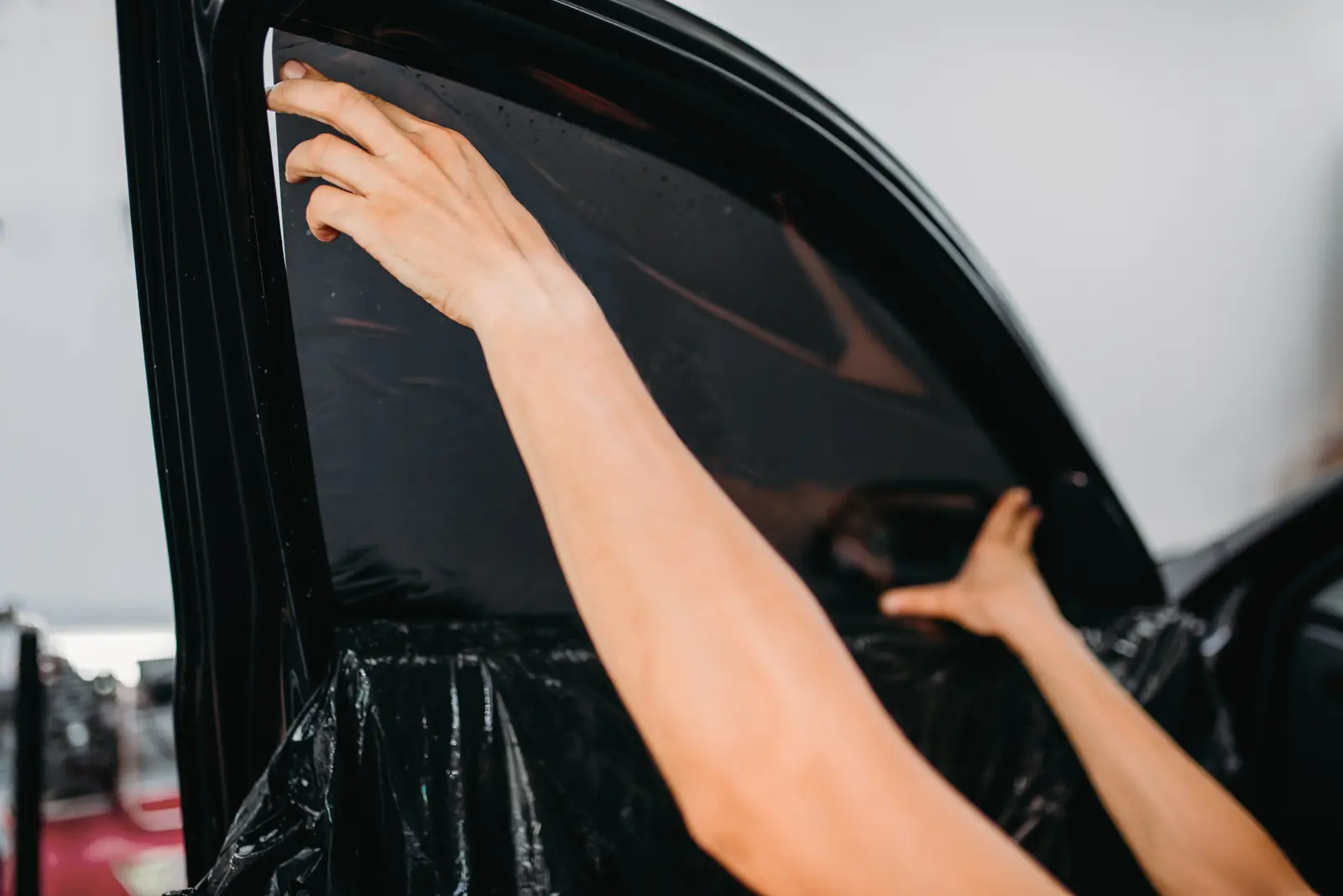
When the job’s done, check the work against the agreed window list and raise any concerns with the installer. Keep the final invoice, film details, applicable warranty, any required registration confirmation and the care instructions together. Ask when to raise a concern and how to arrange an inspection. Follow your product’s care instructions rather than borrowing a curing time from someone else’s experience; our aftercare guide covers what comes next.
Keep the purchase and handoff connected
Review the applicable warranty before agreeing and retain the final records together.
Agreed quote
Keep the named windows and chosen work. Review the applicable warranty before agreeing.
Final work record
Keep film and shade details by window and the final invoice. Compare completed work with the agreed list.
Warranty records
Retain the applicable written terms and registration confirmation if registration is required.
Care and claim route
Keep product-specific care instructions, the first contact and the inspection route with the record set.
Send a request that gets you a useful answer
ZNT currently advertises ceramic window tinting with lifetime-warranty wording, and its general terms refer to the express written warranty provided (ZNT Window Tinting; ZNT warranty terms). Ask for that document with a quote for your car.
Adapt this message:
My vehicle is [year, make, model and body style]. Existing film is [known details or unknown]. I’d like [named windows] assessed, and my priorities are [comfort, visibility or appearance]. I’m in [area], with [proposed location/access]. Please list the film line and shade for each area, what’s included and excluded, any removal assessment, the expected total and how changes are approved. Please also send the written warranty that applies, the claim process and the plan for where the installation will happen.
Send those details through ZNT’s contact form to get a recommendation and a current quote.