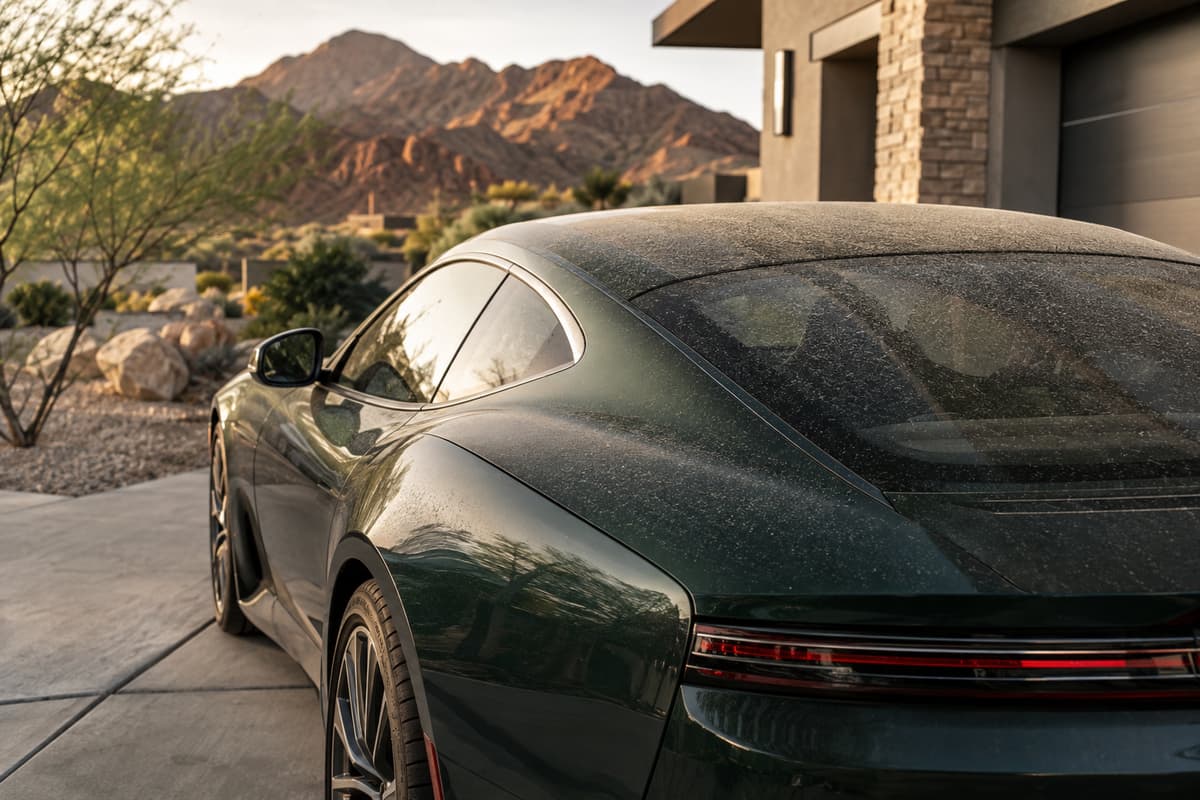
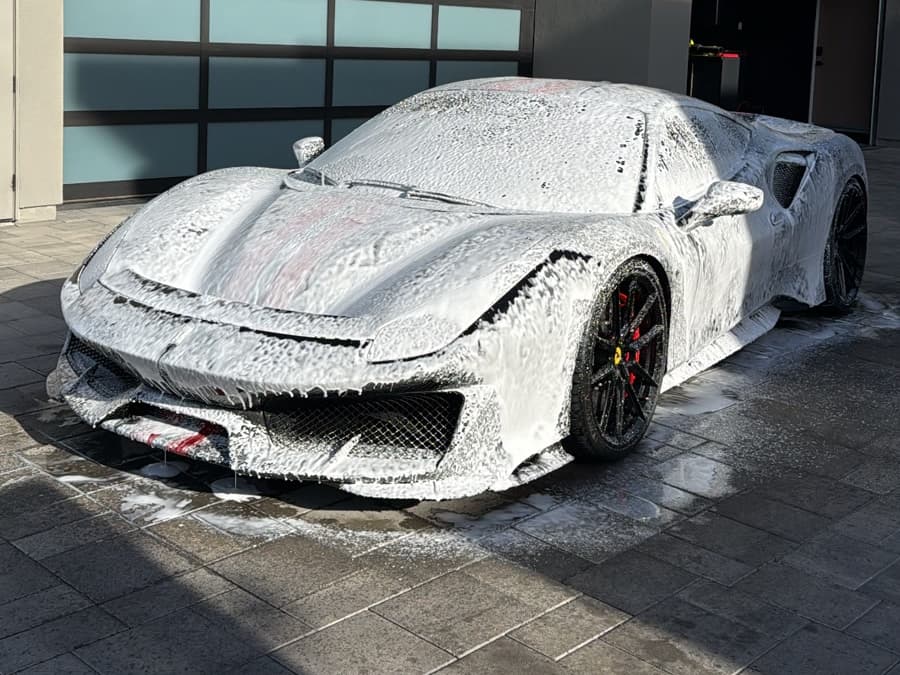
A road trip usually leaves a handful of small jobs: bugs on the front, dust all over the outside, crumbs in the cabin and maybe a spill nobody mentioned. Start with what’s actually there. A long drive on its own isn’t a reason to clay the paint, polish it or replace a coating.
First, rule out anything that isn’t cleaning
Known damage, a warning, something working oddly or water inside you can’t explain? Deal with that first, using the car’s instructions and qualified help. A dirty window or camera is different: clean it the way that part’s instructions say (Tesla’s component-care guidance, for example, treats cameras separately from painted panels). If you still can’t see properly or a system concern remains, get it looked at.
Start with the issue you actually have
A long drive alone does not decide the treatment. Do not drive if you cannot see properly.
It is not a cleaning issue
For a warning light, damage, unusual behavior or unexplained water, follow the owner’s manual and seek qualified help before cleanup. You do not need to test anything yourself.
Dirt is blocking a view
Follow the specific instructions for the dirty window or camera. If the view remains inadequate or a system acts up, get qualified help.
Everyday dirt, outside or in
Choose the work actually needed and check new-coating or film rules. Set up with the right products, tools and conditions to complete every step.
Make a quick outside-and-inside list
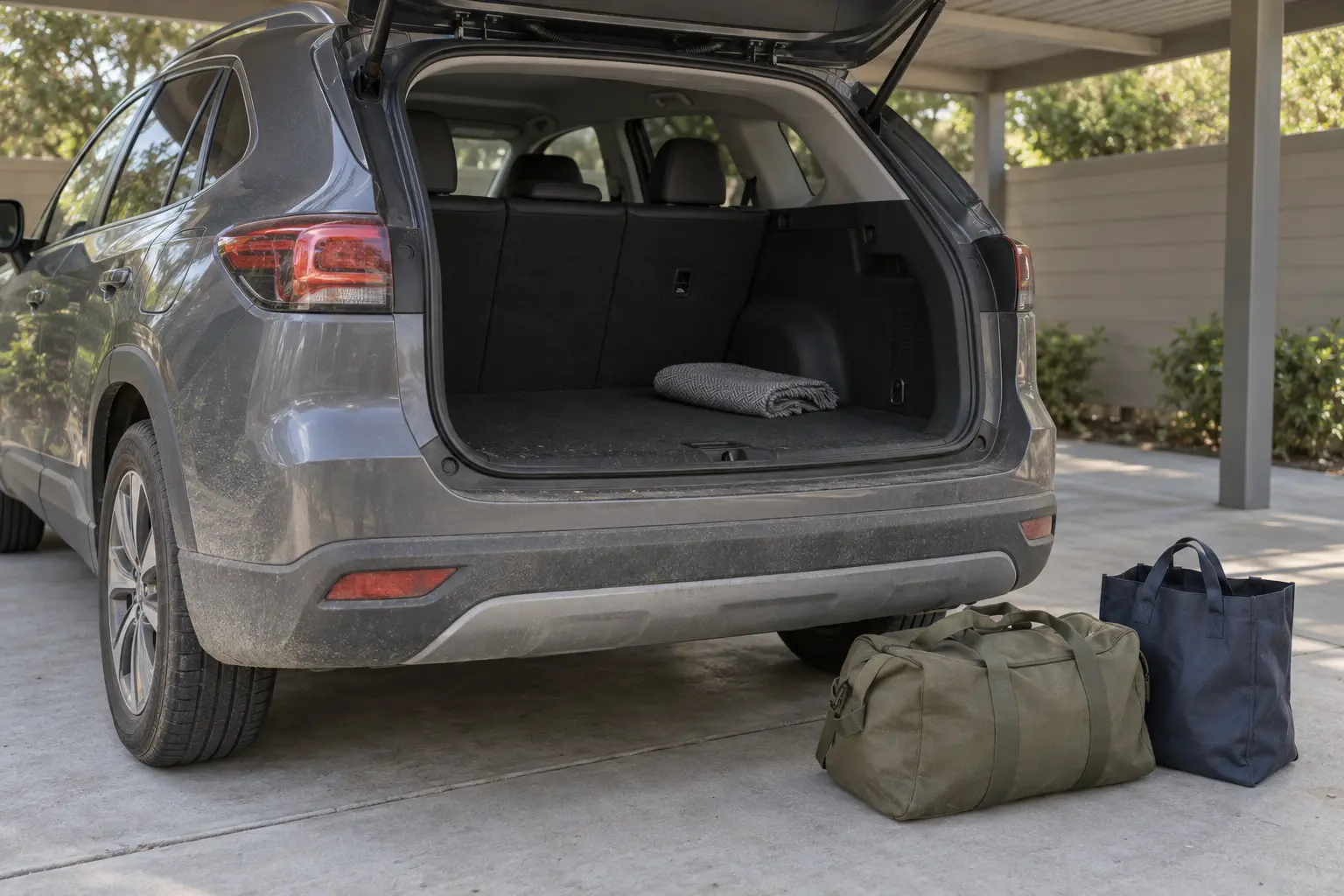
Unload your bags and trash, then note what you can see without taking anything apart. “Dust on the body, bugs on the front, dry crumbs on the rear floor” is far more useful than “needs everything.” Add any spill, road treatment or off-road driving you know about.
Check your records for the paint finish, any coating or film, and recent installation instructions; “unknown” is a useful answer too.
Pick a time and place where you can finish
Las Vegas has hot summers, plenty of sun and bouts of wind-blown dust or sand (NWS Las Vegas climate summary). So where you work and how hot the surfaces really are matter more than the clock.
Work in shade and let hot surfaces cool as your car’s and products’ instructions require. If wind keeps blowing grit onto the car, or conditions won’t let you finish properly, find another spot or get help. Hyundai’s 2025 US exterior-care guidance specifically warns against washing a warm car or washing in direct sun.
That doesn’t mean leaving bug residue until your next full detail; the same guidance says to deal promptly with insects and bird droppings. Just don’t do it on a hot panel or let a cleaner dry on the surface.
New protection adds a wrinkle. If a fresh film’s early washing restriction seems to clash with getting new grime off, ask the installer what to do next.
Wash the outside in order
Skip the quick dry wipe that makes a dusty car look presentable before a real wash. Hyundai warns that wiping dirt off dry can scratch the finish, and a cloth labeled microfiber won’t make grit or a dirty tool harmless.

Follow your car’s full cleaning process: get the loose dirt off before anything touches the paint, then finish the rinsing and drying, with clean tools. For more on handling everyday dust, see our guide to safe between-wash care for a dusty car.
If something’s stuck on and a normal wash doesn’t shift it, treat it as its own question instead of pressing harder. Paint, film, glass, wheels and camera lenses can each have different restrictions, so don’t carry one paint cleaner or pressure-washer setting around the whole car. Hyundai’s exterior cleaning instructions treat finishes and parts separately, including warnings about high-pressure water near cameras, sensors and connectors.
Give the cabin its own short list
Work through the areas you can reach rather than buying a treatment for every surface.
- Vacuum dry debris. Where the surface and tool instructions allow, vacuum dry crumbs and grit with a clean, suitable attachment. This step isn’t for liquids or anything you can’t identify.
- Pin down any remaining mark or spill. Note what spilled, where and when, if you know. Follow that material’s care instructions promptly, and don’t treat upholstery, screens and trim as one washable surface.
- Put the mats back properly. Follow your car’s instructions for fastening and refitting. Make sure the driver’s mat is secured before you drive, and never stack another mat on top.
Tesla’s Model 3 manual shows why this matters: it treats interior materials differently, recommends appropriate vacuuming, cautions against over-wetting carpet, gives clear mat-fastening warnings and warns against letting water or cleaner into seat-belt mechanisms (Tesla interior and mat care).
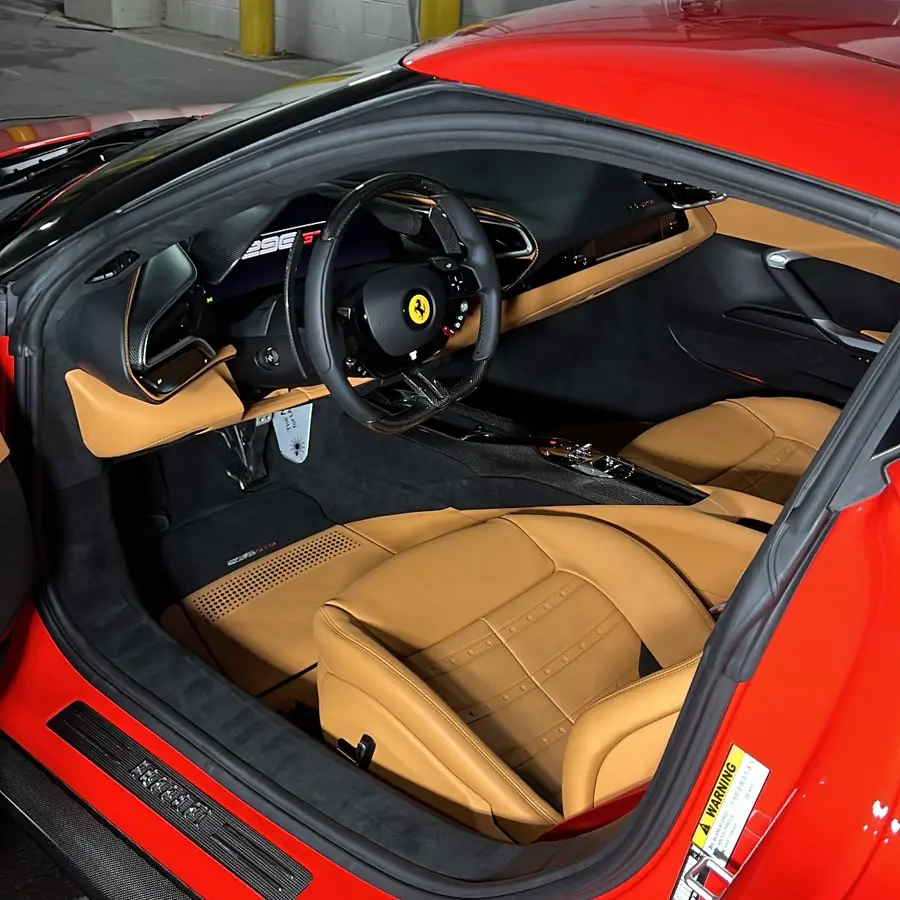
If a wet patch has an unclear source or spread, or the problem involves a seat belt or another part of the car, stop treating it as a simple spill. More scrubbing or a stronger air freshener isn’t a diagnosis.
Give the exterior and cabin their own lists
Follow the instructions for your vehicle, each surface and any coating or film.
Scroll across to compare all columns.
| Exterior | Cabin |
|---|---|
| Loose dust and grit: remove it first as the vehicle’s wash instructions direct. Do not dry wipe. | Bags and trash: unload them so accessible areas are ready to clean. |
| Finish the wash: complete rinsing and drying, and keep tools clean. | Dry crumbs and grit: vacuum where the manual allows, using a clean suitable attachment. |
| Stuck-on residue: use care suited to the surface; do not simply scrub harder. | Spill or mark: identify the material and follow its care directions promptly. |
| Glass, film, wheels and cameras: follow their separate rules instead of one method for everything. | Removed mats: refit correctly and secure the driver mat. Never stack another mat over it. |
A normal post-trip cleanup does not automatically require a deep detail.
Decide what’s left
You can make this call after a sensible cleanup, or before you start if uncertainty is the reason you want help.
Scroll to see all columns.
| What you now know | Next step |
|---|---|
| The basic cleanup did the job | Go back to your usual routine; no automatic upgrade needed. |
| Some ordinary cleaning is still unfinished | Finish it in suitable conditions, or get help with that part. |
| A residue, mark or smell you’re unsure about remains | Describe it and ask for an assessment before choosing a treatment. |
| A problem with the car itself, or damage, has turned up | Keep it out of the cleaning request and get the right vehicle help. |
For anything left over, note the area, what changed and what you’ve already tried (“not attempted” is fine), plus any protection details you know (or “unknown”). A wide photo and a closer one, taken while parked, can show where it is.
Write down what is left
You can ask for help without attempting a fix or answering every question first.
Ask for the right amount of help
ZNT’s Mobile Detailing Service brings interior and exterior care together. Say whether you need ordinary exterior cleaning, attention inside, or an assessment of a specific leftover concern. Its service terms note that a car’s condition affects the quote.
If you’re weighing how much professional work to ask for, our guide to deciding between a wash, maintenance detail or deep detail can help. Once the trip’s actual issues are handled, settle back into a sensible routine instead of treating every journey as a full reset. Our guide to how often to detail a car in Las Vegas can help you set one.
Use ZNT’s contact form to describe your car, location, what you’ve noticed inside and out, any known protection and anything you’ve already tried, and ask for a service recommendation and current quote.