Pick your tint around the view you need on your hardest regular drive, then compare heat-control specs among the options that suit your car and the current rules. A shade name alone can’t tell you how much light the finished window lets through, how comfortable the car will feel or what you’ll see at night.
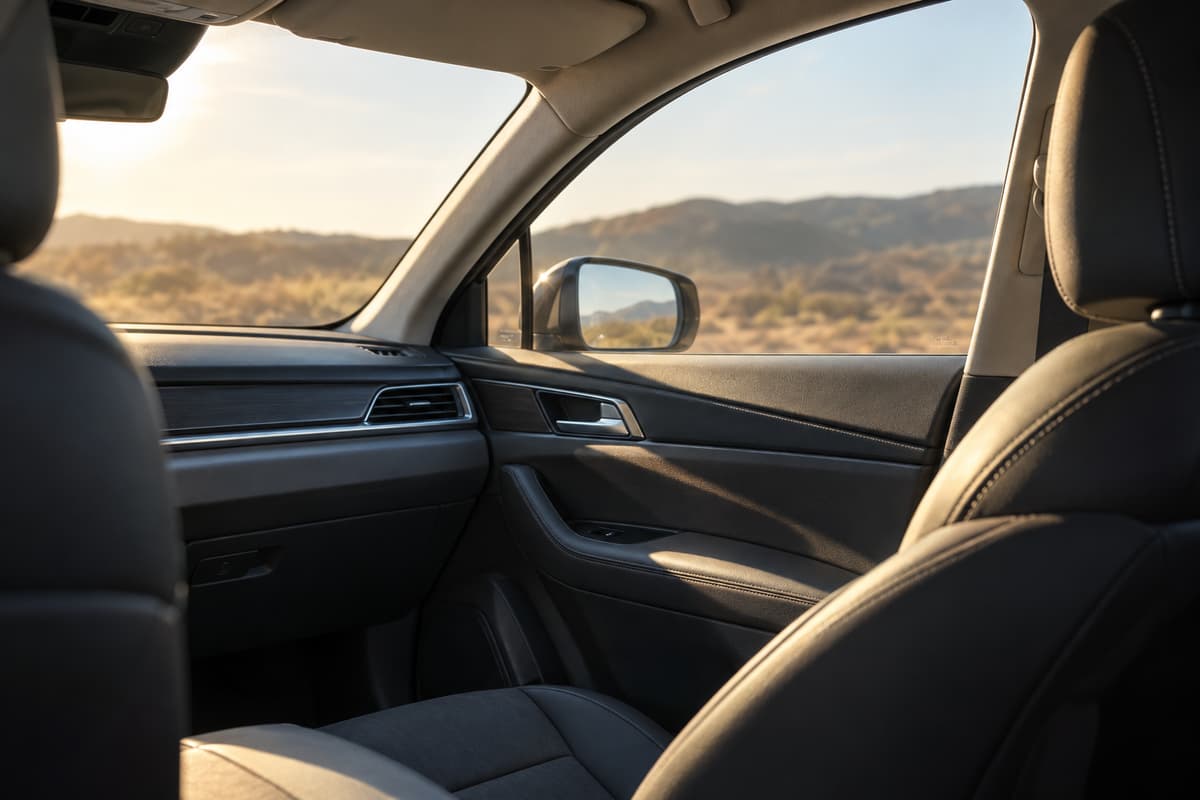
Las Vegas gets plenty of sunshine and hot summers, so daytime comfort matters (National Weather Service climate overview). But an afternoon errand, a shaded parking garage and the drive home after dark ask very different things of your eyes. Plan for your whole routine, including anyone else who drives the car.
What the percentage actually means
Visible light transmission, or VLT, is the share of visible light that gets through; a lower VLT means less light. It does not mean the same percentage of heat is blocked, which is why automotive spec sheets list visible-light transmission and solar-energy rejection separately (3M’s technical sheet).
Keep three different numbers apart:
- Product name: the name or shade number that identifies a particular film.
- Published VLT: the manufacturer’s stated value, which may already describe that film applied to a specific type of glass.
- Installed-window measurement: a reading taken on the actual window in your car.
Before comparing percentages, ask which one you’re looking at. “I want the 35” isn’t as useful as knowing the product, its test conditions and the result you want on each window.
VLT measures visible light
A lower VLT number means less visible light passes.
Scroll across to compare all columns.
| Example VLT | Visible light transmitted on a 100% scale |
|---|---|
| 70% | 70 out of 100 parts |
| 50% | 50 out of 100 parts |
| 20% | 20 out of 100 parts |
Your glass is part of the result
The same film can have different published VLT figures on different glass. 3M’s July 2021 Ceramic IR technical sheet lists its Ceramic IR 70 film like this:
Scroll to see all columns.
| Glass before film | Published VLT with Ceramic IR 70 |
|---|---|
| Clear glass, 89% VLT | 78% |
| Automotive green glass, 73% VLT | 64% |
Both examples use 6 mm glass and the sheet’s stated ANSI/NFRC 200 testing basis (3M reference data and limitations).
Notice that the “70” in the product name isn’t either combined result. And multiplying a film-on-glass figure by your glass’s transmission again would count the glass twice.
One film, two reference glass types
3M Ceramic IR 70: published manufacturer examples.
Scroll across to compare all columns.
| Reference glass | Glass VLT before film | Combined VLT with film |
|---|---|---|
| Clear glass | 89% | 78% |
| Automotive green glass | 73% | 64% |
Published VLT with film already includes the reference glass. Source: 3M Ceramic IR Series, Rev B, July 2021; both panes are 6 mm, ANSI/NFRC 200.
Bring any paperwork for existing film. If you don’t know whether your glass has added film or a factory treatment, say so. A dark look doesn’t reveal the material or its performance, so the installer needs to check what’s there before proposing another layer or a replacement.
Treat heat comfort and darkness as separate choices
For daytime comfort, ask about the exact film’s total solar energy rejection (TSER) along with its VLT. UV and infrared figures cover other parts of the spec; neither stands in for the full picture. Make sure competing numbers use comparable glass and test methods. LLumar’s automotive data, for example, notes that actual performance varies with glass properties (LLumar performance data).
So instead of “How dark do I have to go to beat the heat?”, ask: which suitable films give me the documented solar performance I want while keeping the visible light I need? Our guide to whether ceramic tint is worth it walks through comparing the upgrade itself.
Give your night drive a vote
If your evening commute or a dim parking area already makes it hard to see, prioritize keeping the available light. Don’t assume a “ceramic” label or a glare-reduction claim means better night vision.
A small 2000 study of 20 people found that tint’s effect on contrast sensitivity varied with how dark the tint was and with the driver’s age (LaMotte and colleagues’ study abstract). It’s a good reminder that people differ, and that “Is it legal?” and “Can I see well enough?” are two separate checks.
Scroll to see all columns.
| If your priority is… | Talk about this before choosing |
|---|---|
| Lots of evening or early-morning driving | Lighter legal options and the side and rear views you rely on |
| Daytime heat comfort | Solar data for the specific product, without assuming you need the darkest shade |
| A certain look or more privacy | The look you want, then whether the proposed setup meets your visibility and legal needs |
| A car several people drive | Every regular driver’s needs, including whoever is least comfortable in low light |
See samples in person, not in photos
Ask to see the actual product in person, and find out what you’re looking at: film alone, film on a demo pane or a known installed setup. A sample held over glass that already has film isn’t necessarily what’s being proposed.
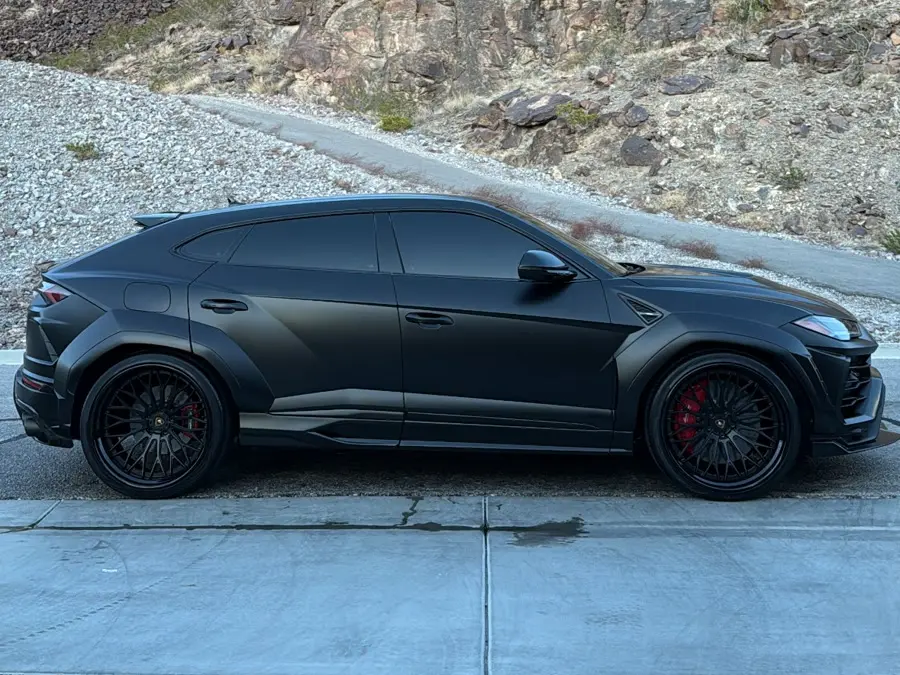
If you can, look at a known installed example while parked, in both bright and dim surroundings, checking the side-window and mirror views you use. Don’t accept a poor view on the theory that you can always roll the window down. Photos are fine for discussing looks, but they can’t show what you’ll see at night.
Check the rules for each window
Nevada’s rules treat windows differently. For the windows right beside the driver, the statute looks at total light transmission through the tint material and the safety glass together. The windshield and rear window have separate provisions (NRS 484D.440).
Before you choose, read our Nevada tint-rules guide and keep the current rule tied to each window in your quote.
Bring a window-by-window plan to your consultation
Jot down your car, any known existing film and the driving situation that worries each driver. Then make a row for each window and answer:
- Which driver and which everyday view matter most here?
- What exact product and shade are being proposed?
- What glass was used for its published VLT and solar data?
- What combined result is expected on this car, and how will it be checked?
- What current legal requirement applies to this window?
Plan one glass area at a time
Start with the vehicle and year, known glass or film, and every regular driver’s needs. Consider each window separately.
If a proposal still leaves your toughest view unresolved, consider a lighter suitable option or hold off. For prices and terms, our quote and written-warranty guide covers what to ask next.
ZNT offers ceramic Window Tinting. Tell ZNT about your vehicle, existing glass or film, driving habits and location for a current recommendation and quote, and bring the window-by-window questions above.